










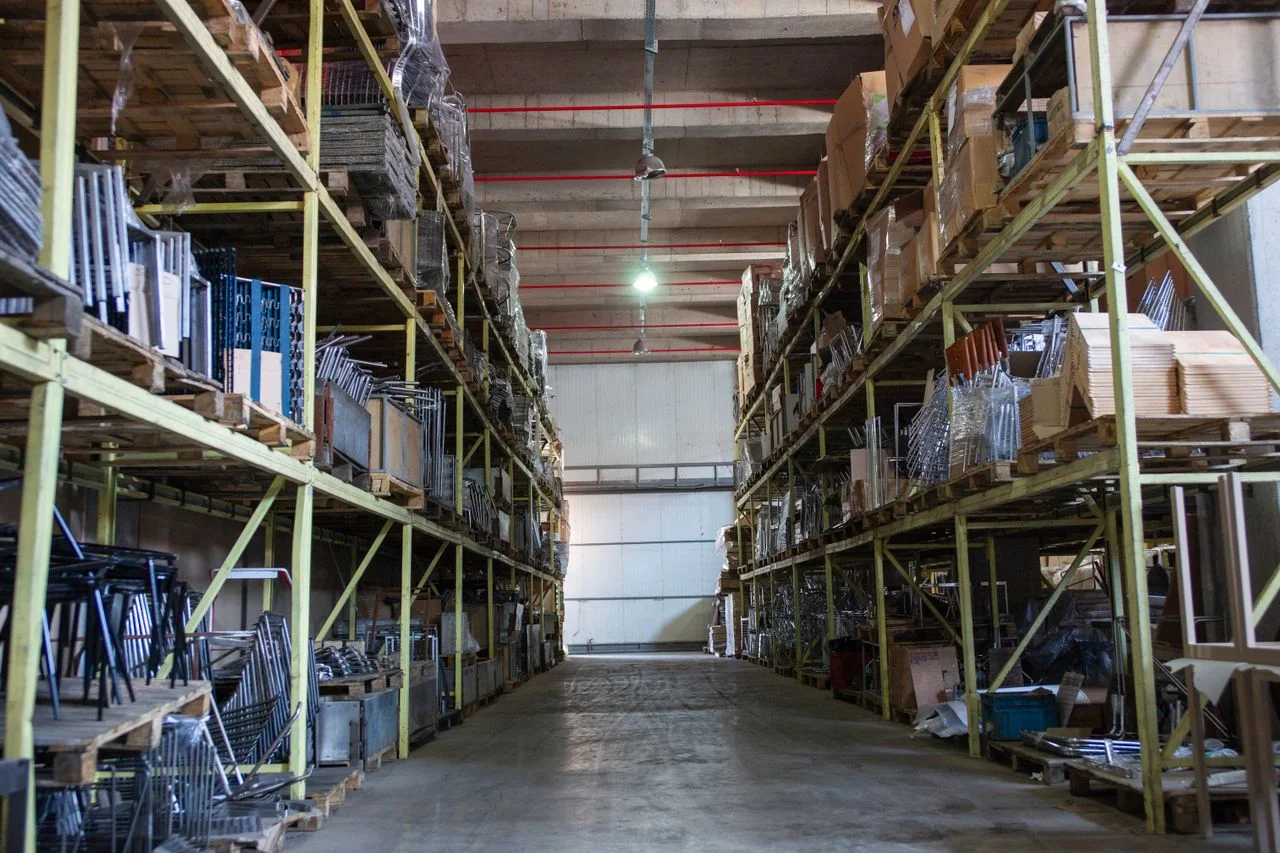
Learning How to Start a Self Storage Business
Learning how to start a self storage business starts with an important reality check: this is a commercial real estate business, not a low-cost side hustle. Building or converting a facility from the ground up typically runs from several hundred thousand dollars into the low millions, though there are lower-cost entry points, such as converting an existing building or starting with a smaller outdoor vehicle storage lot. This guide walks through the full process, including the more accessible paths, so you can pick the model that actually fits your budget.
What Is a Self Storage Business?
A self storage business rents individual storage units or spaces to customers who need somewhere to keep belongings, vehicles, business inventory, or equipment they don’t have room for at home or work. Customers typically sign a month-to-month lease and access their space during posted hours, and typically secure the unit with their own lock or, increasingly, a facility-provided electronic or app-based access system, with the facility handling security, maintenance, and administration.
Common self storage formats include:
- Indoor climate-controlled units
- Outdoor drive-up units
- Boat and RV storage (open lot, canopy, or fully enclosed)
- Portable container storage, where a container is delivered to the customer and later moved to a storage yard
Is a Self Storage Business Profitable?
Self storage can produce strong property-level operating margins once a facility reaches stable occupancy, but that shouldn’t be confused with an owner’s actual net profit. Large publicly traded storage operators have recently reported same-store operating or net operating income (NOI) margins ranging from the high 60s to high 70s percent, but that figure describes property-level performance before an individual owner’s financing costs, depreciation, taxes, and capital expenditures. Actual owner returns vary significantly based on acquisition or development cost, how much debt is involved, interest rates, occupancy, rental rates, and ongoing capital spending.
Occupancy performance also varies by operator and portfolio. Recent public operators have reported physical occupancy roughly in the mid-80s to low-90s percent range, which is a more defensible benchmark than treating any single number as an industry standard. Break-even occupancy (the point where rental income covers operating costs) is sometimes cited around 40 to 60 percent of stabilized income before accounting for debt service, but this depends heavily on your specific debt load, rent levels, operating costs, and unit mix, so treat any single break-even figure as a starting point for your own math rather than a guarantee.

That profitability, though, comes after a long runway. Lease-up (the period between opening and reaching stable occupancy) commonly takes roughly 18 to 36 months or more for a ground-up facility, and the business doesn’t generate meaningful cash flow until then. This is a longer, more capital-intensive path than most of the other business types typically covered in beginner “how to start a business” guides.
How Is Self Storage Revenue Actually Calculated?
Rather than relying on a single “average income” figure, which varies enormously by facility size, it’s more useful to understand the calculation itself:
Gross rental revenue = occupied units × effective monthly rent × 12, plus any ancillary revenue (tenant insurance programs, retail items like locks and boxes, truck rental partnerships, and so on).
Net operating income (NOI) = property revenue minus property-level operating expenses (utilities, repairs, staffing, marketing, property taxes, insurance).
Owner cash flow is what’s left after NOI once debt service and other financing obligations are paid. This is the number that matters most to you personally, and it can look very different from NOI, especially for a newly financed project. Large public operators reporting NOI margins in the high 60s to high 70s percent range are a useful benchmark for property-level performance, but an indebted first-time owner’s bottom-line economics will typically look quite different, particularly in the early years.
Choose Your Business Model
This decision affects every other step, including your budget, so it’s worth deciding early which path fits your situation.
Ground-Up Construction
Buying land and building a new facility from scratch. This is the highest-cost path and the one most likely to be underestimated. Current 2026 construction estimates put single-story conventional self-storage construction at roughly $55 to $85 per gross square foot, single-story climate-controlled facilities at roughly $80 to $120 per square foot, and multistory climate-controlled facilities at roughly $105 to $170 per square foot, before land acquisition and other development costs. That means total project costs for a meaningful-sized facility can easily reach several million dollars once land and soft costs are included, not just the low millions. Local labor, materials, land prices, site conditions, and zoning requirements can all move the final number substantially, so treat any single total figure as a rough starting point rather than a budget. This model gives you full control over design and unit mix but carries the longest timeline, often 8 to 14 months for construction alone in many cases, plus additional months (sometimes considerably more, depending on entitlement and site work) for permitting and zoning approval before that.
Converting an Existing Building
Repurposing an existing structure (a warehouse, old retail building, or similar) into storage units. This is generally less expensive than ground-up construction, with current industry estimates putting adaptive-reuse conversion costs around $35 to $70 per gross square foot, though a very small or simple property, particularly one you already own, can come in well under that on a total-dollar basis. It’s generally the fastest path to opening since you’re skipping ground-up construction, though the building’s layout and condition will limit your design options.
Boat, RV, and Vehicle Storage
An outdoor lot for boats, RVs, and other vehicles has a narrower customer base and lower revenue per square foot than traditional climate-controlled self storage, but it also has a meaningfully lower barrier to entry. A simple fenced and paved outdoor lot can cost around $15 per square foot to develop, per current industry estimates. Covered canopy parking costs more, with different sources putting turnkey canopy construction anywhere from roughly $30 to $36-plus per square foot depending on scope and specification, so get a project-specific quote rather than assuming it simply adds a flat amount on top of the open-lot figure. Security infrastructure (cameras, gate access, lighting) adds further cost that varies too much by facility size and specification to generalize into a single national range, so budget this based on quotes for your actual site. If you already own suitable land, this is often the most accessible entry point into the self storage industry.
Portable Container Storage
Rather than building a fixed facility, you deliver storage containers directly to customers and later relocate full containers to a storage yard. This model requires less real estate upfront (a smaller storage yard rather than a full facility) but does require containers, a delivery vehicle, and logistics for moving and stacking units.
| Model | Typical Startup Cost | Timeline to Open | Barrier to Entry |
|---|---|---|---|
| Ground-up construction | Roughly $55-$170+ per sq ft depending on type, before land; total project cost often several million | 12 months or more for construction, plus permitting time | Highest |
| Converting an existing building | Roughly $35-$70 per sq ft | Faster, varies by conversion scope | Moderate |
| Boat/RV/vehicle outdoor lot | Roughly $15+ per sq ft for open lots, more for covered options; varies by land and coverage | Faster than ground-up indoor construction | Lower, especially if you already own land |
| Portable container storage | Lower real estate cost, but requires containers and logistics | Varies | Moderate |
Step 1: Research Your Market and Confirm Demand
Before committing capital, confirm the local market can actually support another storage facility. Building where supply already exceeds demand is one of the more expensive mistakes an operator can make in this industry. Research existing facilities in your target area, their occupancy levels (public sources and local commercial real estate brokers can help here), current rental rates, and how much unmet demand appears to exist.
A feasibility study, whether done yourself or through a firm that specializes in self storage development, is standard practice before committing to a location, especially for ground-up construction.
Step 2: Choose Your Location
Location affects everything from construction cost to long-term occupancy. For traditional self storage, visibility and proximity to residential areas matter most, since most customers want convenient access. For boat and RV storage specifically, customers are typically willing to travel farther for the right facility, so a location near water, campgrounds, or recreational areas can work well even outside a residential center, and land in those areas is sometimes more affordable than in-town.
Step 3: Confirm Zoning Before You Buy or Lease Land
Zoning and permitting can significantly affect your cost, timeline, and even whether a project is feasible at all. Before purchasing or committing to land, confirm with your local planning department that self storage (or your specific model, since boat/RV storage sometimes falls under different zoning than indoor climate-controlled storage) is permitted at that site. This step comes before the financial planning step for a reason: a zoning problem can eliminate a location entirely, so it’s worth confirming before you build a budget around it.
Step 4: Write a Business Plan and Line Up Financing
Given the capital involved, most self storage operators need financing, and most lenders and investors will want to see a real business plan before committing money. Your plan should cover:
- Business model. Which of the paths above you’re pursuing and why
- Market analysis. The demand research from Step 1
- Break-even occupancy. Your total monthly operating costs and loan payments, divided by your projected monthly rental income at full occupancy, to estimate how many units you need filled to cover costs
- Operating expenses. Utilities, repairs, software, taxes, insurance, payroll, security monitoring, and marketing, budgeted monthly
- Financing plan. How much you’re funding yourself versus through a loan or investors, and what collateral or equity that requires
Step 5: Handle Business Registration, Licensing, and Zoning Permits
At the state level, you’ll typically register your business (commonly as an LLC or corporation, though this isn’t a federal requirement) with your Secretary of State. The SBA notes that registration costs are generally under $300 in most cases, though the exact amount varies by state and business structure. You’ll also need an Employer Identification Number (EIN) from the IRS, which is free to obtain directly.
Locally, requirements vary by state and municipality, but commonly include a general business license, zoning permit, and building permits for any construction or conversion work, all typically handled through your city or county planning department. There’s no single nationwide rule dictating exactly what’s required, so the SBA’s guidance is to check applicable federal, state, and local requirements directly for your specific location and project. Building permits in particular can take several months to approve and may cost a percentage of your total construction budget, so factor that timeline into your overall project schedule rather than treating it as a quick final step.
State-specific lien laws matter here too. How you’re legally allowed to handle delinquent accounts (auctioning off the contents of an unpaid unit, for example) is governed by state-specific self storage lien laws, and the rules vary. The Self Storage Association (SSA) publishes state-by-state resources on this, and it’s worth reviewing before you open, since getting this process wrong can create real legal exposure.
Step 6: Get the Right Insurance
At minimum, plan for:
- Property insurance, covering the building and any owned equipment
- General liability insurance, covering injury or damage claims related to your property or operations
- Optional tenant insurance programs, which many facilities offer (or require) for customers to insure their own stored belongings, and which can also become a modest secondary revenue stream for the business. Offering or administering tenant insurance can trigger state-specific licensing requirements or exemptions, so check your state’s rules (the Self Storage Association has worked extensively on this topic) before setting one up.
Insurance costs vary significantly based on facility size, coverage level, and location, so get quotes specific to your actual project rather than budgeting from a generic estimate.
Step 7: Build, Convert, or Prepare Your Facility
This step looks different depending on your model from Step 2:
- Ground-up or converted indoor facilities need unit construction, climate control if offered, lighting, and access systems.
- Outdoor and boat/RV lots need site grading, paving or compacted gravel, fencing, and lighting at minimum, with canopy or fully enclosed coverage as optional upgrades that increase cost but also typically support higher rental rates.
Across all formats, security infrastructure is worth prioritizing rather than treating as an afterthought: keypad or app-based gate access, well-placed security cameras with adequate resolution and retention, and strong perimeter fencing all directly affect both theft risk and how comfortable prospective tenants feel renting from you.
Step 8: Set Your Pricing
Self storage pricing typically varies by unit size, climate control, and drive-up versus indoor access, so any benchmark needs a defined unit size to be useful. As a reference point, national data puts a standard 10×10 non-climate-controlled unit at roughly $120 per month and a comparable 10×10 climate-controlled unit at roughly $137 per month, though local market rates vary substantially and are the better benchmark to price against once you’ve completed your market research from Step 1.
Step 9: Market Your Facility and Reach Stable Occupancy
Getting to stable occupancy is the make-or-break period for a self storage business.
- Local SEO and Google Business Profile matter heavily, since most self storage searches are local and high-intent (“storage units near me”).
- Signage and visibility at the facility itself act as ongoing advertising for drive-by traffic.
- Pre-leasing before opening, where possible, helps shorten the lease-up period.
- Referral and partnership relationships with local moving companies, real estate agents, and property managers can create a steady stream of qualified leads.
Common Mistakes to Avoid
- Skipping the feasibility study. Building in a market that’s already saturated is one of the costliest mistakes in this business.
- Underestimating the timeline. Between zoning, permitting, and construction, ground-up facilities routinely take well over a year before opening, and lease-up to stable occupancy can take years beyond that.
- Treating security as optional. Basic fencing alone rarely provides adequate protection or peace of mind for tenants.
- Ignoring state-specific lien laws. Mishandling delinquent units without following your state’s legal process can create real liability.
- Underestimating operating expenses. Utilities, repairs, software, insurance, payroll, and marketing add up faster than many first-time owners expect.
Can You Start a Self Storage Business With No Money?
Not realistically, if you mean a ground-up or full conversion project funded entirely out of pocket. Given the construction costs outlined above, this isn’t a business you can start with zero capital the way you might start a side-hustle service business.
That said, there are real ways to reduce how much personal cash you need:
- Outside investors or partners, who contribute capital in exchange for equity
- Debt financing through a bank, SBA loan, or commercial real estate lender, though lenders will still expect a solid business plan, financial projections, and creditworthiness, and will likely require collateral
- Seller financing, if you’re acquiring an existing facility rather than building new, where the seller finances part of the purchase price directly
- Contributing land instead of cash, if you already own suitable property, through a partnership structure with an investor or developer who funds construction
- Starting with a smaller, lower-cost model, such as a boat/RV outdoor lot on land you already own, rather than a full indoor facility
The honest takeaway: you can meaningfully reduce your personal cash outlay through financing structures and by choosing a smaller model, but self storage isn’t a business you can realistically launch with no capital or financing at all.
Frequently Asked Questions
How much does it cost to start a self storage business? It depends heavily on your model. Ground-up construction runs roughly $55 to $170+ per square foot depending on type (before land), which often adds up to several million dollars total for a meaningful-sized facility. Converting an existing building typically runs $35 to $70 per square foot, and a smaller outdoor boat/RV storage lot on land you already own can be developed for meaningfully less than either. Build your budget around the specific model, size, and location you’re pursuing rather than a single average figure.
Is a self storage business profitable? It can be. Large public storage operators report property-level operating margins in the high 60s to high 70s percent range, but that’s not the same as an individual owner’s net profit after debt, taxes, and capital costs. Actual profitability depends heavily on occupancy, financing, and location, and it typically takes years to reach stable, profitable occupancy after opening.
Do I need a license to start a self storage business? Requirements vary by state and locality. Depending on where you’re building, you may need business registration, a local business license, zoning approval, and building or fire permits, among other approvals. Confirm the specifics with your city or county planning department before committing to a site.
Can I start a self storage business with less money? Yes, relative to ground-up construction. Converting an existing building you already own, or starting with a smaller outdoor vehicle storage lot on land you control, are both meaningfully lower-cost entry points than building a new indoor facility from scratch.
How long does it take to open a self storage facility? For ground-up construction, expect roughly 8 to 14 months for construction alone, plus an additional 3 to 6 months or more for permitting and zoning approval before that. Converting an existing building or developing a simpler outdoor lot is typically faster.
Self storage sits at a different scale than most of the business types in this series, closer to real estate development than a solopreneur side business. If you’re comparing this against a lower-capital option, our guides on how to start a photography business, an HVAC business, and a junk removal business cover paths with a much smaller startup runway.
