










How to Start a Junk Removal Business
Starting a junk removal business can be a practical way to enter the service industry with a relatively low barrier to entry. The business model is simple: you help homeowners, businesses, and property managers remove unwanted items and dispose of them properly while earning money for your services.
To start a junk removal business, you need a reliable vehicle, basic equipment, proper licenses, a business plan, and a strategy for finding customers. Many entrepreneurs begin small with a pickup truck and gradually grow into full service junk removal companies with multiple trucks and employees.
The demand for junk removal services continues to grow across the United States because people regularly need help clearing homes, offices, rental properties, construction debris, and unwanted furniture.
Whether you want to start a junk removal business with no money, use a pickup truck you already own, or build a larger operation, this guide explains the complete process.
What Is a Junk Removal Business?
A junk removal business helps customers remove unwanted items from residential and commercial properties. These items can include old furniture, appliances, electronics, yard waste, construction materials, and general household clutter.

Unlike traditional waste collection services, junk removal companies usually provide on demand services. Customers contact the business, schedule a pickup, and the company handles the removal, transportation, sorting, recycling, and disposal process.
Common junk removal services include:
- Residential cleanouts
- Office and commercial cleanouts
- Garage cleanouts
- Estate cleanouts
- Appliance removal
- Furniture removal
- Construction debris removal
- Yard waste removal
- Rental property cleanouts
Companies such as 1-800-GOT-JUNK? have built successful businesses by offering convenient pickup services for customers who want quick and reliable solutions.
Is a Junk Removal Business Profitable?
Yes, a junk removal business can be profitable when it is managed correctly. The profitability depends on factors such as your location, operating costs, pricing strategy, customer acquisition, and how efficiently you manage disposal expenses.
Many junk removal businesses charge customers based on:
- The amount of space items take in the truck
- Type of materials being removed
- Labor required
- Disposal fees
- Distance traveled
For example, removing a small amount of household clutter may cost less than clearing an entire property after a renovation.
Large companies like College HUNKS Hauling Junk & Moving have shown that junk removal can become a scalable business model by expanding services, hiring teams, and building strong local brand recognition.
A small junk removal business can become profitable because customers are often willing to pay for convenience. Many homeowners do not have the time, equipment, or vehicle needed to remove large unwanted items themselves.
How Much Can a Junk Removal Business Owner Make?
Reported figures vary quite a bit depending on the source and the size of the operation, but a consistent pattern shows up across multiple industry reports: a solo operator running one truck full-time commonly grosses somewhere in the $90,000 to $150,000 range annually, with net profit margins typically landing around 20 to 30 percent once fuel, disposal fees, insurance, and marketing are factored in. That puts realistic solo owner take-home pay in the neighborhood of $40,000 to $90,000 in a solid year, with newer operators often earning less while they build a customer base, and two-truck or multi-crew operations capable of reaching well beyond that as they scale.
These are directional ranges, not guarantees. Some new operators report earning far less in their first year while marketing and reputation are still building, and results depend heavily on your local market, pricing, and how efficiently you manage disposal costs.
Examples of Successful Junk Removal Businesses in the US
1-800-GOT-JUNK? built its brand primarily through a franchise model, consistent branding across trucks and marketing, and a strong focus on convenience and customer service. It’s one of the most recognized names in the industry and is frequently cited as a case study in service-business branding.
College HUNKS Hauling Junk & Moving grew by combining junk removal with full-service moving under one brand, letting franchisees serve two related customer needs with the same trucks and crews.
Local independent operators succeed differently: most win through a strong Google Business Profile, consistent reviews, and repeat referral relationships with realtors, property managers, and contractors, rather than national brand recognition. For a new entrepreneur without franchise capital, this is usually the more realistic starting point.
Different Ways to Start a Junk Removal Business
Before diving into the steps, it’s worth deciding which model fits your goals and available capital.
Solo Operator
Best for entrepreneurs with a low startup budget who already own or can access a pickup truck. You handle every job yourself, keep all the profit, and can scale up later once you have steady demand.
Small Team Operation
Best once you’re consistently booked and ready to take on larger residential or commercial jobs. Adding a second person (or a second truck) increases your job capacity but also adds payroll, scheduling, and workers’ comp considerations.
Franchise Model
Best for entrepreneurs who want an established brand, training, and operating systems rather than building everything from scratch. Junk removal franchise investments commonly range from roughly $90,000 on the low end for smaller-market territories up to $350,000+ for a major national brand, plus ongoing royalty fees that typically run 6 to 17 percent of revenue depending on the franchisor. That’s a meaningfully higher barrier to entry than starting independently, so it’s worth weighing against the brand recognition and support you’re getting in return.
| Factor | Independent Business | Franchise |
|---|---|---|
| Startup cost | Lower, often a few thousand to ~$30,000 | Higher, commonly $90,000 to $350,000+ |
| Branding | Build it yourself | Established, recognized brand |
| Ongoing fees | None beyond normal operating costs | Royalty and marketing fees, often 6-17% of revenue |
| Operating freedom | Full control over pricing and services | Bound by franchisor systems and territory rules |
| Support and training | Limited to what you seek out yourself | Structured training and ongoing support |
Step 1: Research Your Local Junk Removal Market
Before starting your business, research your local market to understand demand and competition.
Look at:
- Number of competitors in your area
- Services they offer
- Their pricing structure
- Customer reviews
- Areas they serve
- Their marketing strategies
For example, starting a junk removal business in a growing city like Dallas, Houston, Phoenix, Atlanta, or New York can provide opportunities because these areas have many homeowners, businesses, and property managers.
If you are researching how to start a junk removal business in NY, consider factors like population density, apartment buildings, commercial properties, and disposal regulations. New York City and surrounding areas have strong demand for apartment cleanouts, office removals, and renovation debris removal.
Market research helps you identify opportunities instead of entering an area blindly.
Step 2: Create a Junk Removal Business Plan
A junk removal business plan helps you understand your goals, expenses, customers, and growth strategy.
Your business plan should include:
Business Overview
Explain what type of junk removal services you will provide.
Examples:
- Residential junk removal
- Commercial cleanouts
- Construction debris removal
- Recycling services
Target Customers
Identify who you want to serve.
Potential customers include:
- Homeowners
- Renters
- Real estate agents
- Property managers
- Contractors
- Small businesses
- Office owners
Pricing Strategy
Research local competitors and create pricing that covers your expenses while remaining competitive.
Marketing Plan
Include strategies for getting customers through:
- Google Business Profile
- Local SEO
- Social media marketing
- Paid advertising
- Referral programs
A clear business plan gives you direction and helps you avoid unnecessary expenses.
Step 3: Understand Junk Removal Business Startup Cost
The junk removal business startup cost depends on how large you want to begin.
A small operation can start with basic equipment, while a larger company may require trucks, employees, insurance, and commercial space.
Typical startup expenses include:
Vehicle
A truck is usually the biggest investment.
Options include:
- Pickup truck
- Cargo van
- Box truck
- Dump trailer
If you already own a suitable vehicle, you can significantly reduce your starting costs.
Equipment
Basic equipment may include:
- Work gloves
- Safety glasses
- Moving blankets
- Dollies
- Shovels
- Ropes
- Tarps
- Brooms
- Protective clothing
Business Registration
You may need to pay fees for:
- Business registration
- Permits
- Licenses
- Insurance
Marketing
You should budget for:
- Website development
- Google Business Profile optimization
- Online advertising
- Business cards
- Vehicle branding
A small junk removal business may start with a few thousand dollars, while a larger operation with trucks and employees can require a much higher investment.
Here’s a rough breakdown to help you budget, though actual costs vary a lot by location and whether you already own a vehicle:
| Item | Estimated Cost |
|---|---|
| Used pickup truck (if you don’t already own one) | $5,000 – $25,000 |
| Trailer | $1,000 – $5,000 |
| Basic equipment (gloves, dollies, straps, tarps) | $500 – $2,000 |
| Business registration and licensing | $50 – $500+ |
| Insurance (general liability, commercial auto) | $1,000+ annually |
| Marketing (website, Google Business Profile, cards) | $500 – $3,000 |
If you already own a suitable truck, your realistic starting cost drops significantly, often into the low thousands rather than tens of thousands.
Step 4: Decide What License You Need to Start a Junk Removal Business
One common question entrepreneurs ask is, what license do I need to start a junk removal business?
The answer depends on your location and the type of services you provide.
Most areas require basic business registration, but additional permits may apply depending on your state, city, and disposal activities.
You may need:
- General business license
- Local operating permit
- Commercial vehicle registration
- Waste hauling permit
- Environmental permits for certain materials
For example, regulations in California, New York, and other states may have specific rules regarding waste transportation and disposal. In California, junk removal businesses generally need a business license and a waste hauler permit, since transporting solid waste falls under state waste-hauling rules. In Texas, junk removal businesses aren’t issued a general contractor license the way some trades are, but haulers using enclosed trailers to transport solid waste may need a special permit. For entrepreneurs specifically researching how to start a junk removal business in NY, New York and New Jersey are both known for stricter local hauling regulation than many other states, so it’s worth checking city and state requirements closely before collecting commercial waste.
A commonly missed requirement: USDOT number. Depending on the combined loaded weight of your truck and trailer, you may need a USDOT number even as a small operator. The common trigger is a combined weight over 10,001 pounds once loaded, not the empty weight of your vehicle, so a personal pickup with a trailer can cross that threshold once it’s full of junk. Check this against your actual loaded operating weight rather than assuming a smaller vehicle exempts you.
Materials with extra rules. General hauling permits are typically handled at the state and local level, but certain materials, such as electronics (e-waste) and other hazardous items, fall under federal EPA standards as well, with day-to-day enforcement usually delegated to states. If your services will include appliance or electronics removal, check whether those items require separate handling or disposal procedures in your area.
Before launching your business, check requirements with your city government website and state business authority.
You should also consider:
- General liability insurance
- Commercial auto insurance
- Workers compensation insurance if hiring employees
Proper licensing protects your business and builds customer trust.
Step 5: How to Start a Junk Removal Business With No Money
Many entrepreneurs want to know how to start a junk removal business with no money.
While starting completely free is difficult, you can reduce your upfront costs by starting small.
Here are practical approaches:
Use Equipment You Already Own
Start with basic tools you already have and upgrade later.
Rent a Vehicle
Instead of purchasing a truck immediately, rent a vehicle when you have paid jobs.
Partner With Others
You can collaborate with contractors, movers, or property managers who need junk removal services.
Start With Small Jobs
Focus on:
- Garage cleanouts
- Furniture removal
- Small residential jobs
Use early profits to invest in better equipment and marketing.
Many successful service businesses start small and grow through reinvestment.
Step 6: How to Start a Junk Removal Business With a Pickup Truck
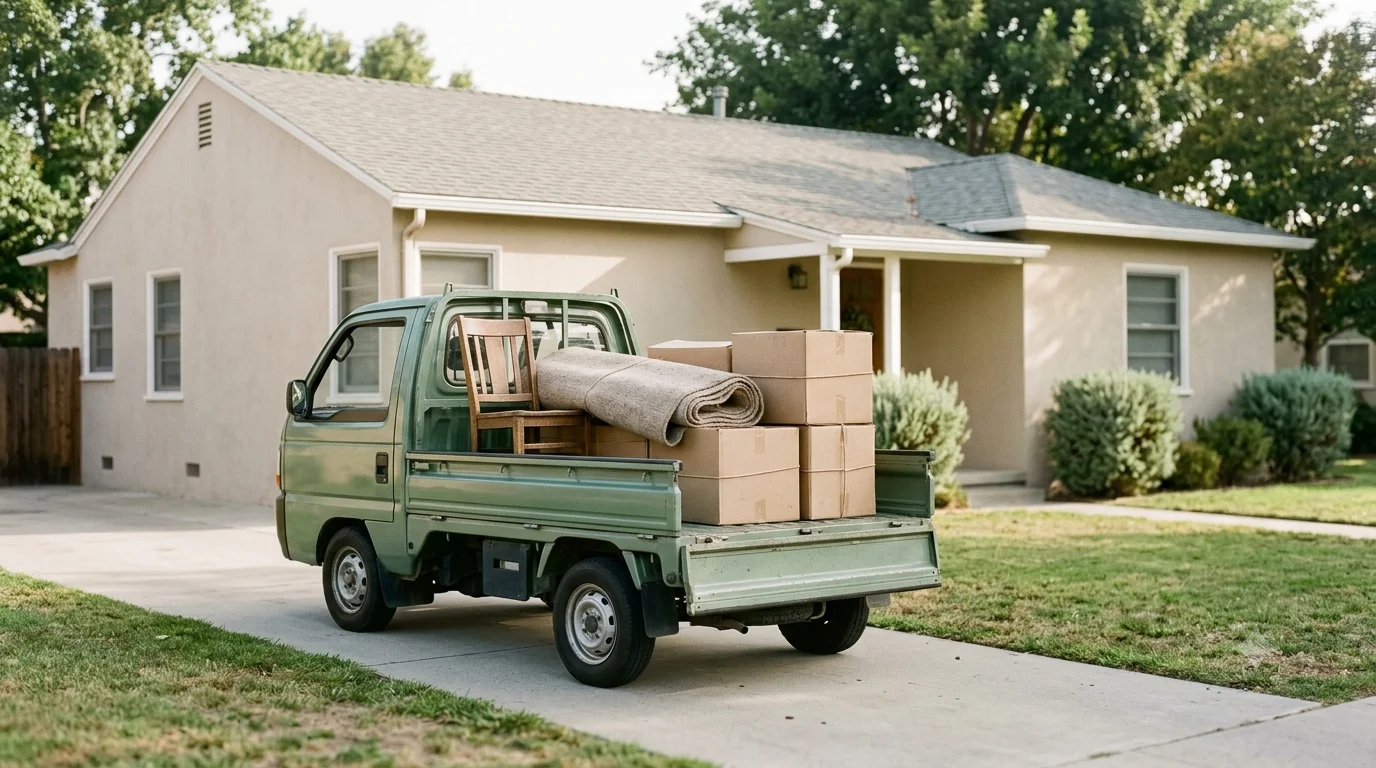
A pickup truck can be enough to start a junk removal business.
Many entrepreneurs begin with a personal truck before investing in larger vehicles.
With a pickup truck, you can handle:
- Furniture removal
- Appliance pickup
- Yard waste
- Small renovation debris
- Garage cleanouts
To improve your efficiency:
- Use a trailer when possible
- Organize items properly
- Schedule jobs in nearby areas
- Charge based on volume and labor
As your customer base grows, you can upgrade to larger trucks and hire additional workers.
Step 7: Buy the Right Equipment
Having the right equipment helps you complete jobs safely and efficiently.
Essential equipment includes:
Safety Equipment
- Gloves
- Safety boots
- Masks
- Protective eyewear
Moving Equipment
- Hand trucks
- Furniture straps
- Dollies
- Lifting tools
Transportation Equipment
- Truck or van
- Trailer
- Tie-down straps
- Tarps
Safety should always be a priority because junk removal often involves heavy, sharp, or hazardous items.
Step 8: Set Your Junk Removal Pricing
Pricing correctly is important for building a profitable business.
Common pricing methods include:
Volume Based Pricing
Charge based on how much space items occupy in your truck.
Hourly Pricing
Charge customers based on labor hours.
Flat Rate Pricing
Provide a fixed price after inspecting the job.
Your pricing should consider:
- Labor costs
- Fuel expenses
- Disposal fees
- Equipment maintenance
- Insurance costs
- Profit margin
Avoid competing only on low prices. Reliable service and convenience are often more valuable to customers.
Step 9: Market Your Junk Removal Business
Getting customers is one of the most important parts of building a successful junk removal business.
Create a Google Business Profile
Most customers search online for local services.
Optimize your profile with:
- Business information
- Service areas
- Photos
- Customer reviews
- Accurate contact details
Build a Website
Your website should include:
- Services
- Pricing information
- Service locations
- Contact form
- Customer testimonials
Use Local SEO
Target keywords related to your location.
Examples:
- Junk removal services in Dallas
- Affordable junk removal in Chicago
- Furniture removal services in Miami
Build Partnerships
Connect with:
- Realtors
- Contractors
- Apartment managers
- Storage facilities
These partnerships can create consistent referrals.
Step 10: Handle Disposal Responsibly
Professional junk removal companies should focus on responsible disposal.
Whenever possible:
- Recycle materials
- Donate usable items
- Dispose of waste properly
Customers increasingly prefer businesses that follow environmentally responsible practices.
Common Mistakes to Avoid When Starting a Junk Removal Business
Many new entrepreneurs make mistakes that slow down growth.
Avoid these problems:
Underpricing Services
Low prices may attract customers but can damage profitability.
Ignoring Insurance
Accidents can create expensive problems without proper coverage.
Not Tracking Expenses
Monitor fuel, labor, disposal fees, and marketing costs.
Poor Customer Service
Reviews and referrals are extremely important in local service businesses.
Buying Too Much Equipment Too Early
Start with what you need and invest as revenue grows.
Frequently Asked Questions About Starting a Junk Removal Business
How much does it cost to start a junk removal business?
Startup costs vary depending on your equipment, vehicle, location, and business size, but a small operation can realistically start with a few thousand dollars if you already own a suitable truck, while a larger operation with new equipment and trucks can require $20,000 or more.
Is junk removal a good business to start?
Yes. A junk removal business can be profitable because startup costs are relatively low compared with many service businesses. Profit depends on pricing, operating expenses, customer demand, and business efficiency.
How much can a junk removal business owner make?
Solo operators commonly gross around $90,000 to $150,000 annually with net profit margins of roughly 20 to 30 percent, though results vary widely by market, pricing, and experience. Multi-truck operations can earn substantially more.
What license do I need to start a junk removal business?
Most businesses need basic registration, but specific licenses and permits depend on your state and city regulations. Depending on your loaded vehicle weight, you may also need a USDOT number, so check your actual operating weight rather than assuming your vehicle size exempts you.
Can I start a junk removal business with a pickup truck?
Yes, many entrepreneurs start with a pickup truck and expand after building a customer base.
How do I get customers for my junk removal business?
You can attract customers through local SEO, Google Business Profile, referrals, partnerships, social media, and online advertising.
Final Thoughts
Learning how to start a junk removal business is the first step toward building a profitable service company. The business does not require a massive investment if you start strategically.
Begin with market research, create a simple junk removal business plan, understand your licensing requirements, and focus on providing excellent customer service.
Whether you start with a pickup truck or build a larger operation with multiple vehicles, success comes from consistency, smart marketing, and delivering reliable service.
The junk removal industry continues to provide opportunities for entrepreneurs who are willing to solve real problems for customers. With proper planning and execution, a small junk removal business can grow into a valuable local company.
Like other local service businesses, such as an HVAC company or a photography business, junk removal businesses tend to grow through consistent local marketing, strong reviews, and repeat customers rather than one-off advertising pushes. If you’re exploring other service-business paths, those guides cover the same startup fundamentals applied to a different trade.
