










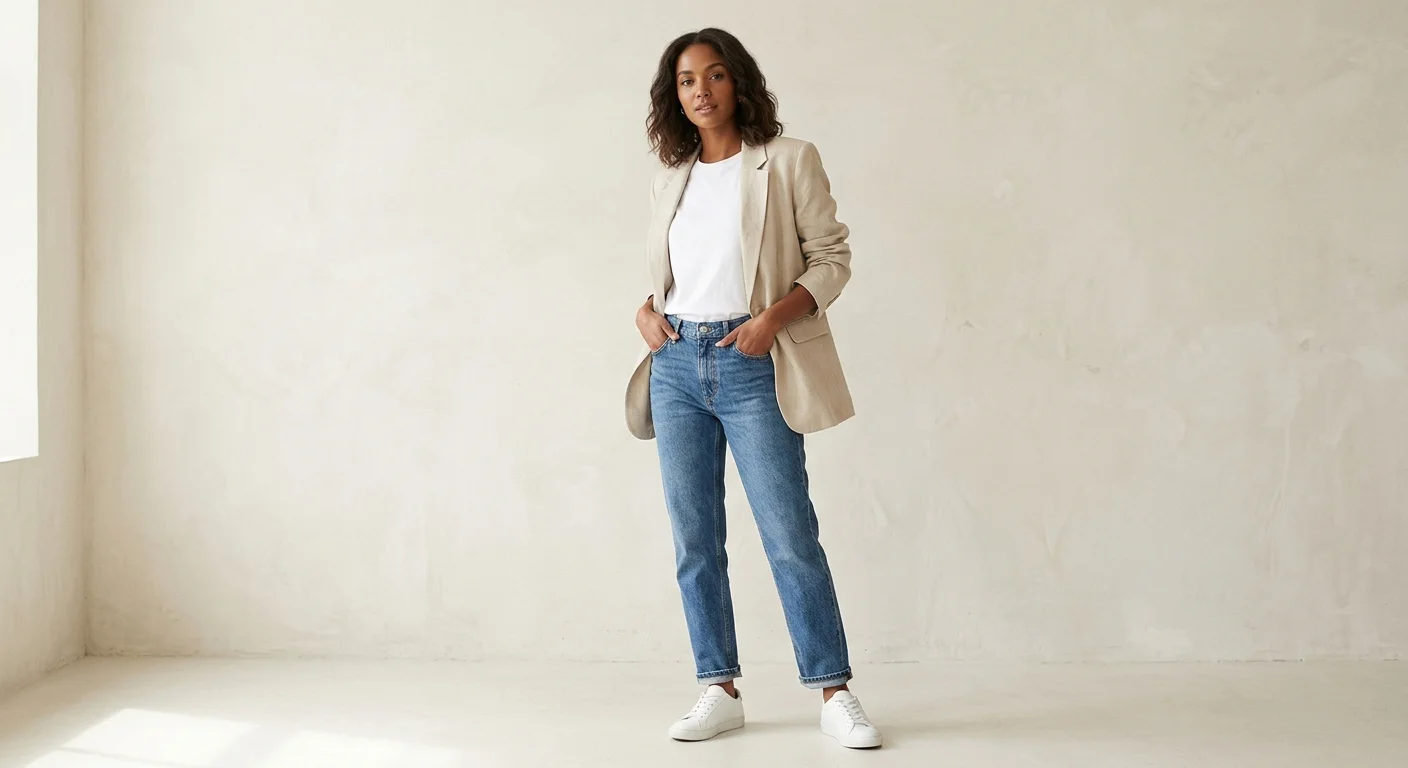
If you’ve come across the word “blazertje” online and aren’t quite sure what it means, you’re not alone. It shows up in Dutch clothing listings, in fashion blogs, and increasingly in English-language search results, often without a clear explanation of where it comes from or whether it describes an actual style of jacket.
The short answer: blazertje is Dutch for “little blazer.” The longer, more useful answer involves understanding Dutch grammar, how the word is actually used by Dutch speakers, and why so much English-language content treats it as a specific fashion category when the evidence for that is thinner than it looks.
This guide covers all of it: the real meaning, the linguistic mechanics behind it, how it’s used in practice, the styles and fabrics that tend to get labeled this way, and practical advice for choosing, styling, and caring for a jacket like this.
What Does Blazertje Mean?
Blazertje breaks down into two parts. “Blazer” is the base word, borrowed directly into Dutch from English and used the same way English speakers use it: a tailored jacket that isn’t part of a matching suit. “-tje” is a Dutch diminutive suffix.
Dutch diminutives are one of the most productive features of the language. Nearly any noun can take one, and the suffix changes slightly depending on the sound at the end of the word: “-je,” “-tje,” “-pje,” “-kje,” or “-etje.” “Blazer” ends in an “r,” which is why it becomes “blazertje” rather than “blazerje” or another variant.

So at the most literal level, blazertje simply means “little blazer” or “small blazer.” That’s the whole word.
Diminutives in Dutch Don’t Always Mean “Small”
This is the part most English-language articles skip over, and it’s the part that actually matters if you want to understand the word correctly rather than just translate it.
In Dutch, diminutives are used constantly in everyday speech, and size is often the least important part of what they communicate. A Dutch speaker might order “een kopje koffie” (a little cup of coffee) regardless of the cup’s actual size, or refer to “mijn huisje” (my little house) about a perfectly normal-sized home. The diminutive softens the word, makes it sound more casual, friendly, or affectionate. It’s closer to how English speakers might say “a little something” or add “-y” to a word informally, than it is to a precise measurement.
Applied to clothing, “blazertje” can be used by a Dutch speaker to talk about any blazer at all, including a completely standard, full-sized one, simply because diminutives are how a lot of everyday Dutch conversation and casual writing works. A parent might tell a child to grab “je blazertje” before school, referring to a normal-sized school blazer. A Dutch shopper might casually type “leuk blazertje gezien” (saw a nice little blazer) about a jacket that isn’t small or cropped in any specific way.
This matters because a lot of English-language fashion content treats blazertje as if it names a defined product category, something with a fixed set of features the way “bomber jacket” or “trench coat” does. That framing isn’t well supported. Blazertje is a word about tone and familiarity as much as it is about size.
Is Blazertje an Actual Fashion Category?
Not in any standardized sense. There’s no industry body, sizing chart, or retail classification that defines a blazertje as distinct from a blazer the way there is for, say, a bolero versus a full jacket.
What has happened is that English-language fashion and lifestyle content has picked up the word, likely because it shows up in Dutch and Belgian online retail listings, and built a style narrative around it: lighter fabric, softer shoulders, shorter length, more casual fit. That narrative isn’t wrong, exactly. Those are genuinely common qualities in jackets that get called blazertjes in casual, informal fashion writing. But it’s a description that got applied after the fact, not a definition the word carries on its own.
If you’re shopping for one, the practical takeaway is this: don’t assume a garment has certain features just because a listing calls it a blazertje. Check the actual measurements, fabric, and construction, the same way you would with any blazer.
A Short History of the Blazer Itself
Understanding blazertje means understanding what it’s a diminutive of. The blazer has a documented history that predates the Dutch word by more than a century.
Most fashion historians trace the blazer back to English rowing clubs in the 1800s. One frequently cited origin point is the bright red flannel jackets worn by the Lady Margaret Boat Club at St John’s College, Cambridge, which reportedly gave the garment its name because the color seemed to “blaze.” Whether or not that’s the precise etymological source, the blazer’s early identity is clearly tied to club and sporting culture: brass or metal buttons, solid or striped fabric, a badge or crest, worn as a uniform piece rather than a fashion statement.
Over the twentieth century, the blazer moved well beyond boat clubs. It became standard in school uniforms, entered men’s and women’s business wardrobes, and eventually became one of the most flexible pieces in modern fashion, equally at home over a suit shirt or a plain T-shirt.
The Dutch language absorbed “blazer” as a loanword sometime during this expansion, which is why the diminutive “blazertje” exists at all. You can’t put a Dutch suffix on a word that hasn’t already entered the language.
Common Features Associated With a Blazertje
Even without a formal definition, there’s a real pattern in how the word gets used in casual fashion contexts, particularly in product listings and style content aimed at younger, trend-driven shoppers. Jackets described this way tend to share a handful of traits.
Lighter Construction
Reduced internal padding and shoulder structure compared to a traditional tailored blazer. This makes the jacket easier to wear for long stretches and simpler to layer.
Softer Tailoring
Less rigid shoulder lines, a more natural drape, and often a slightly shorter or more fitted cut than a classic suit jacket.
Casual-Leaning Fabric
Cotton, linen, jersey knits, and cotton-poly blends show up frequently, rather than the heavier worsted wool typical of formal blazers.
Standalone Styling
Designed to be worn on its own rather than as half of a matching suit, paired easily with jeans, casual trousers, skirts, or dresses.
None of these are requirements. A jacket can be labeled blazertje in a Dutch listing while being a completely standard, structured wool blazer. But if you’re browsing English-language content that uses the word as a style descriptor, these are the qualities you’ll usually see it attached to.
Blazertje vs. Blazer: A Practical Comparison
| Feature | “Blazertje” (as typically used in casual fashion content) | Traditional Blazer |
|---|---|---|
| Formal definition | None, informal diminutive | Established tailoring category |
| Typical structure | Softer, less padded | Structured, shoulder padding |
| Common fabric | Cotton, linen, jersey blends | Wool, wool blends |
| Typical use | Casual to smart-casual | Business to formal |
| Length | Often shorter or cropped, not required | Standard hip-length or longer |
| Standalone wear | Almost always | Sometimes part of a matching suit |
Treat this table as a general pattern rather than a rule. Because the word itself doesn’t enforce any of these features, the only reliable way to know what you’re getting is to check the actual product description and measurements.
Popular Styles You’ll See Labeled Blazertje
Cropped
Ends at or above the waist. Pairs well with high-waisted trousers, skirts, and dresses, and is one of the most common styles associated with the word in fashion content.
Oversized
Extra room through the shoulders and body, often worn intentionally roomy over slimmer bottoms for contrast.
Single-Breasted
One column of buttons, the most versatile and easiest to dress up or down.
Double-Breasted
Two columns of buttons with an overlapping front panel. Slightly more formal in appearance even when the fabric and construction are casual.
Longline
Extends below the hip, often worn open over dresses or fitted trousers for a more elongated silhouette.
Unstructured
Minimal or no internal padding, closer to a soft shirt-jacket in how it moves and drapes.
Fabric Guide
Fabric choice affects how a jacket looks, feels, and performs across seasons more than any other single factor.
- Cotton and cotton blends — breathable, holds shape reasonably well, easy to care for. A solid everyday choice.
- Linen — very breathable and ideal for warm weather, but wrinkles easily and has a naturally relaxed, textured look.
- Lightweight wool — offers structure and some warmth without the bulk of heavier suiting wool. Works across most of the year in temperate climates.
- Jersey knit — soft, stretchy, and casual. Feels more like a cardigan than a tailored jacket.
- Tweed — textured and warmer, more associated with autumn and winter styling.
- Polyester and synthetic blends — durable and wrinkle-resistant, often used in budget-friendly versions.
If you expect to wear the jacket often, prioritize breathable natural fibers or blends. If you need something that survives travel and repeated wear without ironing, blends with some synthetic content will hold up better.
How to Choose the Right Fit
Shoulders First
Shoulder seams should sit at the natural edge of your shoulder without pulling, bunching, or drooping past the bone. This is the hardest part of a jacket to alter later, so it’s the first thing to check.
Chest and Closure
You should be able to button the jacket without strain across the chest, and still move your arms forward comfortably. A little room here matters more than a razor-sharp fit.
Sleeve Length
Sleeves should end near the wrist bone, short enough to show a bit of shirt cuff if you’re layering one underneath.
Length
This depends entirely on the silhouette you’re going for. Cropped styles end at or above the waist. Traditional lengths sit around mid-hip. Longline styles extend further down. None of these is more “correct” than another, it’s a proportion choice based on your build and what you’re pairing it with.
By Body Type
- Petite frames tend to look best in cropped or waist-length styles with slim lapels, which avoid overwhelming a smaller frame.
- Taller builds have more flexibility and can carry off longer, oversized, or longline styles without them looking excessive.
- Curvier figures often benefit from a slight waist shape and single-breasted cuts, which follow the body’s line rather than boxing it in.
- Athletic builds usually look cleanest in moderately structured styles that don’t add extra bulk through the shoulders.
How to Style It
For the Office
Pair a neutral-colored jacket (navy, grey, black, camel) with tailored trousers or a knee-length skirt, and keep the shirt or blouse simple underneath. If your workplace allows business-casual dressing, this combination reads as polished without requiring a full suit.
For Casual Wear
A plain T-shirt, straight-leg jeans, and clean white sneakers is the most reliable casual formula. Rolling the sleeves slightly relaxes the look further.
For Evenings
Swap trousers or jeans for a slip dress or dark denim, add heeled boots or loafers, and let the jacket function as the structured piece in an otherwise fluid outfit.
Seasonal Adjustments
- Spring: Lightweight cotton or cotton-linen blends in lighter colors.
- Summer: Pure linen or very lightweight cotton, minimal or no lining.
- Autumn: Medium-weight wool blends or tweed, richer colors like olive, camel, or burgundy.
- Winter: Wool or wool-blend versions layered over a sweater or turtleneck, worn as a mid-layer under a coat if temperatures drop further.
Common Mistakes to Avoid
- Buying based on the word “blazertje” in a listing without checking actual measurements.
- Choosing shoulders that are visibly too wide, assuming it will look “oversized on purpose.”
- Ignoring fabric weight relative to the season you’ll wear it most.
- Over-accessorizing an outfit that’s already doing enough visual work with the jacket itself.
- Skipping the care label and assuming any jacket can go straight into a washing machine.
Caring for a Blazertje
Always start with the care label, since fabric composition varies widely between pieces labeled this way. A few general rules apply across most versions:
- Steam rather than iron when possible, since steam is gentler on both structured and unstructured fabrics.
- Use a padded or shaped hanger to preserve the shoulder line during storage.
- Air the jacket out between wears instead of cleaning it after every use.
- Have wool or lined versions professionally dry cleaned if the label recommends it.
- Store linen pieces in a breathable garment bag to reduce moisture buildup.
Frequently Asked Questions
What does blazertje mean? Blazertje is the Dutch diminutive of “blazer,” and translates literally to “little blazer.” In casual Dutch speech, the diminutive often conveys familiarity or a softer tone rather than a strict statement about size.
Is blazertje an official fashion term? No. There’s no standardized definition or industry category for a blazertje separate from a regular blazer. English-language fashion content has attached style associations (lighter, softer, more casual) to the word, but those aren’t guaranteed features.
Is a blazertje always small or cropped? No. Dutch diminutives don’t always indicate literal size. A blazertje can refer to a completely standard-sized blazer in everyday Dutch usage.
Can you wear a blazertje to work? Yes, particularly in business-casual environments. A simple, well-fitted version in a neutral color pairs easily with tailored trousers or a skirt.
What’s the difference between a blazertje and a regular blazer? Mainly language, not construction. “Blazertje” is a Dutch word; “blazer” is used in both Dutch and English for the same base garment. Any style differences you see in fashion content are informal associations, not fixed rules.
What fabric is best for a blazertje? It depends on the season and how you’ll wear it. Linen and lightweight cotton suit warm weather, wool and tweed suit cooler months, and blends offer a middle ground with easier care.
Bottom Line
Blazertje is, at its core, a Dutch word: the diminutive form of “blazer.” Its most accurate translation is “little blazer,” though in everyday Dutch, that diminutive often signals familiarity or casualness rather than actual size. The style associations you’ll find attached to it in English-language fashion content, lighter fabric, softer tailoring, cropped or relaxed cuts, are real patterns in how the word gets used, but they aren’t rules the word itself sets.
If you’re shopping for one, the most useful approach is the same one that works for any jacket: check the fabric, the fit, the construction, and how it works with what’s already in your closet. The label is a starting point, not a guarantee.
