










Starting a craft business doesn’t require a big budget. It requires creativity, a few supplies you may already have on hand, and a willingness to start small and grow deliberately. Platforms like Etsy and TikTok Shop have made it genuinely easier than ever for makers to turn a hobby into real income, without needing a storefront, inventory warehouse, or upfront capital most other businesses require.
This guide covers exactly how to start a craft business from home, using what you already have: assessing your skills, sourcing free or cheap materials, selling online, marketing without a budget, and scaling smartly once profits start coming in.
Step 1: Discover What You Can Create With What You Already Have
Before buying anything, take stock of what you can already do. Sewing, painting, jewelry-making, candle-making, crocheting, woodworking, paper crafts, they all count, and most people already have at least a beginner-level skill in one of these areas from a hobby, a gift they made once, or something they picked up as a kid.
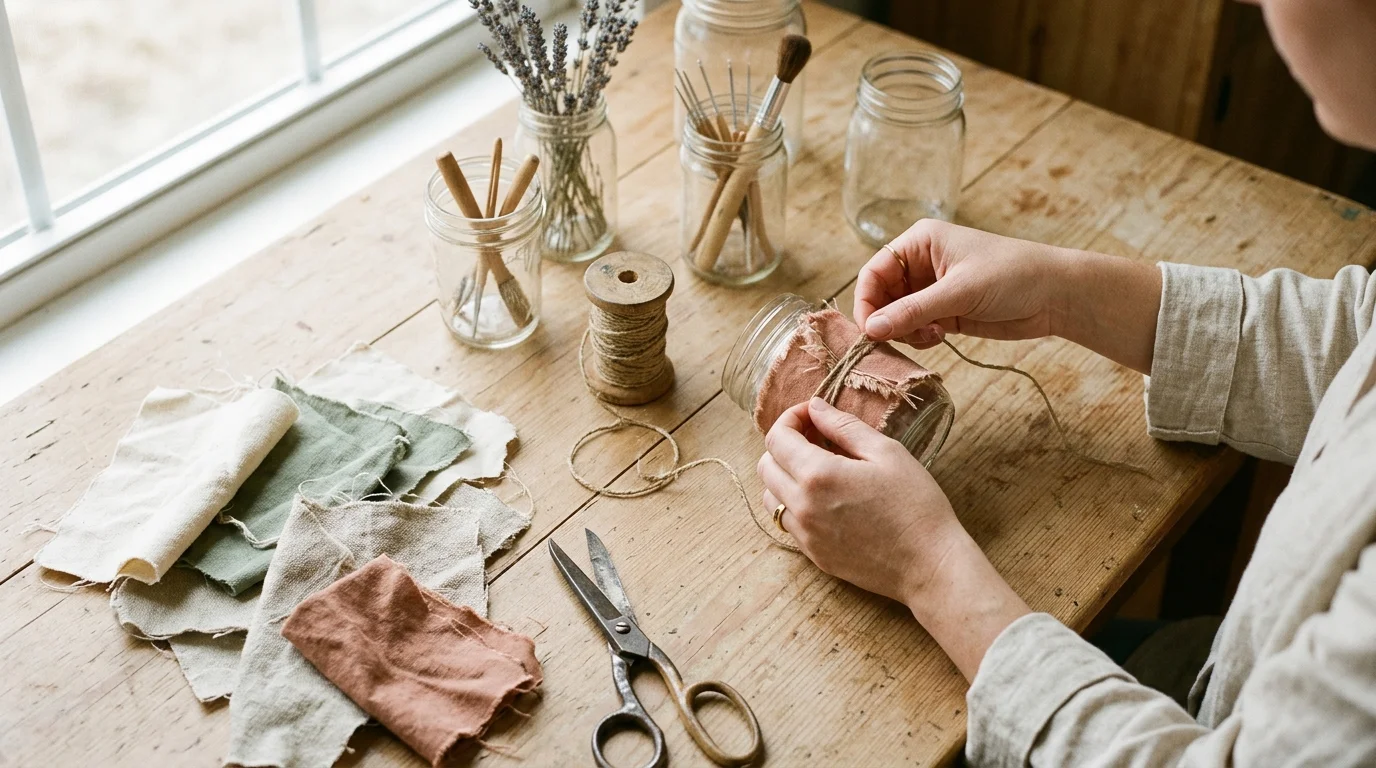
Pair that with a “supply audit” of your own home: fabric scraps in a closet, empty glass jars, spare beads, leftover paper, old buttons. Some of the most successful home-based craft businesses started with exactly this kind of inventory rather than a supply order. The simple formula to work from: skills + materials on hand = your first product idea. You don’t need a perfect idea, just one specific enough to actually start making.
Step 2: Source Affordable Supplies Without Breaking the Bank
Once you’ve settled on a first product, you’ll likely need more materials than what’s sitting in your house, and there are several genuinely low-cost ways to get them.
Thrift stores and dollar stores are consistently underrated as craft supply sources. A candle maker, for example, can often source upcycled glass jars, jam jars, and vintage containers from thrift stores for a fraction of what new containers cost from a craft supplier, and the mismatched, vintage look can even become part of the product’s appeal.
Facebook Marketplace and local Buy Nothing or Freecycle groups are another strong source, especially for larger quantities of fabric, craft tools, or raw materials someone else is getting rid of.
Negotiating with local sellers is worth trying more than most new crafters expect. If you find a seller with a large lot of usable materials, asking for a bulk discount, particularly for something they’re trying to clear out, often works better than it seems like it should.
Step 3: Set Up Shop Without Spending a Dime
Here’s where it’s worth being precise about what each platform actually offers in 2026, since some popular advice on this has gone stale.
Etsy remains the strongest option for searchability, since buyers come to Etsy specifically looking to purchase handmade and vintage goods with clear intent. Etsy charges a $0.20 listing fee per item, a 6.5% transaction fee on the sale price (including shipping), and a separate payment processing fee, which combined typically lands in the high single digits to around 10% of a sale, plus optional fees if you run Etsy Ads or use Offsite Ads.
TikTok Shop has become a legitimate selling channel, especially for products that benefit from being seen in short-form video rather than static photos. As of 2026, TikTok Shop charges a referral fee typically in the 5% to 8% range depending on product category (jewelry, for example, sits at the lower end), with no separate per-listing fee and no separate transaction fee, since payment processing is built into the referral rate. If you work with affiliate creators to promote your products, you’ll also pay an optional commission you set yourself, commonly in the 5% to 25% range, only on sales those creators generate.
Instagram is worth using, but not the way older guides describe it. Meta discontinued Instagram’s dedicated Shop tab and phased out native in-app checkout across US sellers by 2025, so you can no longer “set up a shop” on Instagram the way you can on Etsy or TikTok Shop. What still works well is product tagging on posts and Reels, which drives interested buyers to your Etsy shop or your own website to complete the purchase. Treat Instagram as a discovery and marketing channel that feeds your actual storefront, not a storefront itself.
Facebook Marketplace is useful for local, in-person sales with no fees at all, or for shipped sales, which carry a 5% fee (or a flat 40 cents on shipments of $8 or less).
| Platform | Best For | Typical Fees |
|---|---|---|
| Etsy | Buyer search intent, established craft marketplace | $0.20 listing fee + 6.5% transaction fee + payment processing |
| TikTok Shop | Viral discovery via short-form video | ~5-8% referral fee (varies by category), no listing fee |
| Marketing and discovery, links out to Etsy or your own site | No native checkout as of 2026, product tags link out | |
| Facebook Marketplace | Local sales, low-fee shipped sales | Free for local pickup, 5% for shipped orders |
Step 4: Market Like a Pro, for Free
Word-of-mouth and organic social content remain the most reliably free marketing tools available to a new craft business, and they tend to outperform paid ads early on, since handmade products sell heavily on authenticity and story.
Behind-the-scenes content performs especially well for makers specifically: a time-lapse of a piece being made, an unboxing of a supply haul, a short clip explaining why you chose a particular material. This kind of content lets potential buyers connect with the person behind the product, not just the product itself, which is a meaningful advantage handmade sellers have over larger retailers.
Look for makers in your specific craft niche who’ve grown a following organically and study what they’re actually posting, not just how often. The pattern that shows up consistently is process-focused content over polished product photography alone.
Step 5: Price Your Products the Smart Way
This is where a lot of new craft businesses undercut themselves without realizing it. A workable pricing formula:
Materials cost + labor (your time, valued at a real hourly rate) + profit margin = your price.
The part people skip is the labor line. It’s tempting to price based on materials alone, especially when those materials were sourced cheaply, but your time has real value, and pricing that ignores it isn’t sustainable once you’re making enough product to matter. Undervaluing handmade work is one of the most common mistakes new makers make, and it’s genuinely difficult to raise prices significantly later once customers are anchored to a too-low number.
Step 6: Start Small and Manage Risk
Launch with a small, focused product line, maybe two or three core items, rather than a dozen variations at once. This keeps your material costs and inventory risk low while you learn what actually sells, and it’s far easier to expand a line that’s working than to figure out which of fifteen items to cut.
Many successful craft businesses started this way deliberately: a narrow initial offering, tested against real buyer demand, expanded only once there was evidence to expand into.
Step 7: Reinvest and Grow Gradually
As early sales come in, reinvest before you spend on anything non-essential: better materials, improved packaging, a tool that speeds up production. Track income and expenses from day one, even with something as simple as a free spreadsheet template or a budgeting app, since it’s far easier to build good financial habits from the start than to retrofit them once the business has grown more complex.
Slow, profit-funded growth is a genuinely safer path than taking on debt or spending savings to scale before demand has proven itself.
Step 8: Build Community and Collaborate
Maker communities, whether on Facebook groups, Reddit communities for your specific craft, or Etsy Teams, are a real source of practical knowledge that’s hard to get elsewhere, from sourcing tips to platform-specific advice from people actively doing the same work.
Collaborating with other small creators for cross-promotion (a joint giveaway, a bundle, a shoutout exchange) can introduce your work to an audience that’s already primed to like handmade goods, often at no cost beyond the time it takes to coordinate.
Local craft fairs and markets remain a genuinely effective, low-cost way to build visibility and get direct feedback from buyers in person, something online selling doesn’t offer in the same way.
Step 9: Plan for Scaling When You’re Ready
Once demand becomes consistent rather than occasional, it may make sense to explore wholesale suppliers or bulk material buying to bring your per-unit costs down. Platforms like Faire connect independent makers with retailers looking to buy craft goods wholesale, which is a common next step once a product line has proven itself. For sourcing materials in bulk rather than selling wholesale, platforms like Alibaba are more relevant, particularly once your volume justifies ordering supplies in larger quantities from overseas manufacturers.
The important sequencing point here: scaling should follow demonstrated demand, not anticipate it. Buying bulk inventory or committing to wholesale relationships before you know a product sells consistently is one of the more common ways new craft businesses tie up cash they can’t easily recover.
Frequently Asked Questions
How much money do I need to start a craft business? It’s realistic to start with very little, sometimes under $50, if you’re using materials you already own and selling through a free-to-list platform like TikTok Shop or Facebook Marketplace. Etsy adds a small per-listing cost. Most of your early spending will likely go toward replenishing materials as you sell, not upfront setup.
What crafts sell best from home? This varies by trend and by your own skill, but categories that consistently perform well for home-based sellers include jewelry, candles, personalized or custom items, home decor, and printable or digital craft products, largely because they photograph well, ship easily, and lend themselves to the kind of process-driven content that performs on social media.
Can I really start a craft business with no money at all? You can start with close to no money if you’re using materials already on hand and a free-to-list selling platform, but “no money” is more accurate as “very low money” for most people, since even bare-minimum supply replenishment costs something once initial materials run out.
Do I need a business license to sell crafts from home? Requirements vary by state and city, so check your local regulations, but many home-based craft sellers start as a sole proprietor with minimal formal setup, and add a business license or LLC once sales become consistent enough to justify it.
If you’re comparing craft businesses against other low-capital paths in this series, our guides on how to start a photography business and a bookkeeping business cover a similar startup scale from different angles.
