









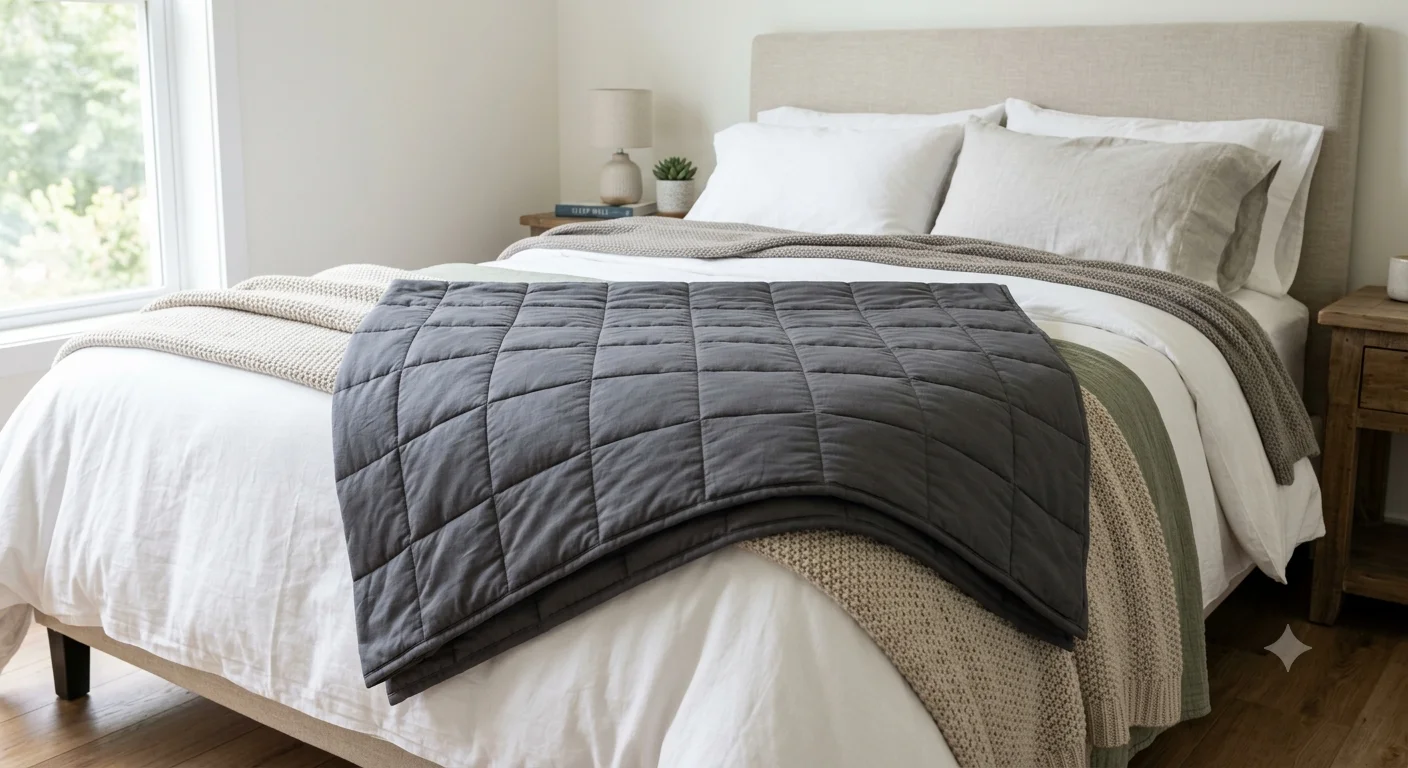
Weighted blankets aren’t like your average throw. Between the filling, the stitched pockets, and sometimes a weight of 15 pounds or more, tossing one in the wash without a plan is a good way to end up with a lumpy, unevenly distributed mess, or worse, a blown-out washer.
Most weighted blankets can be washed one way or another, but the correct method comes down to what’s inside, how the blanket is constructed, and what the care label actually says. Filling type matters, but it’s not the whole story.
What’s Inside Your Weighted Blanket, and Why It Matters
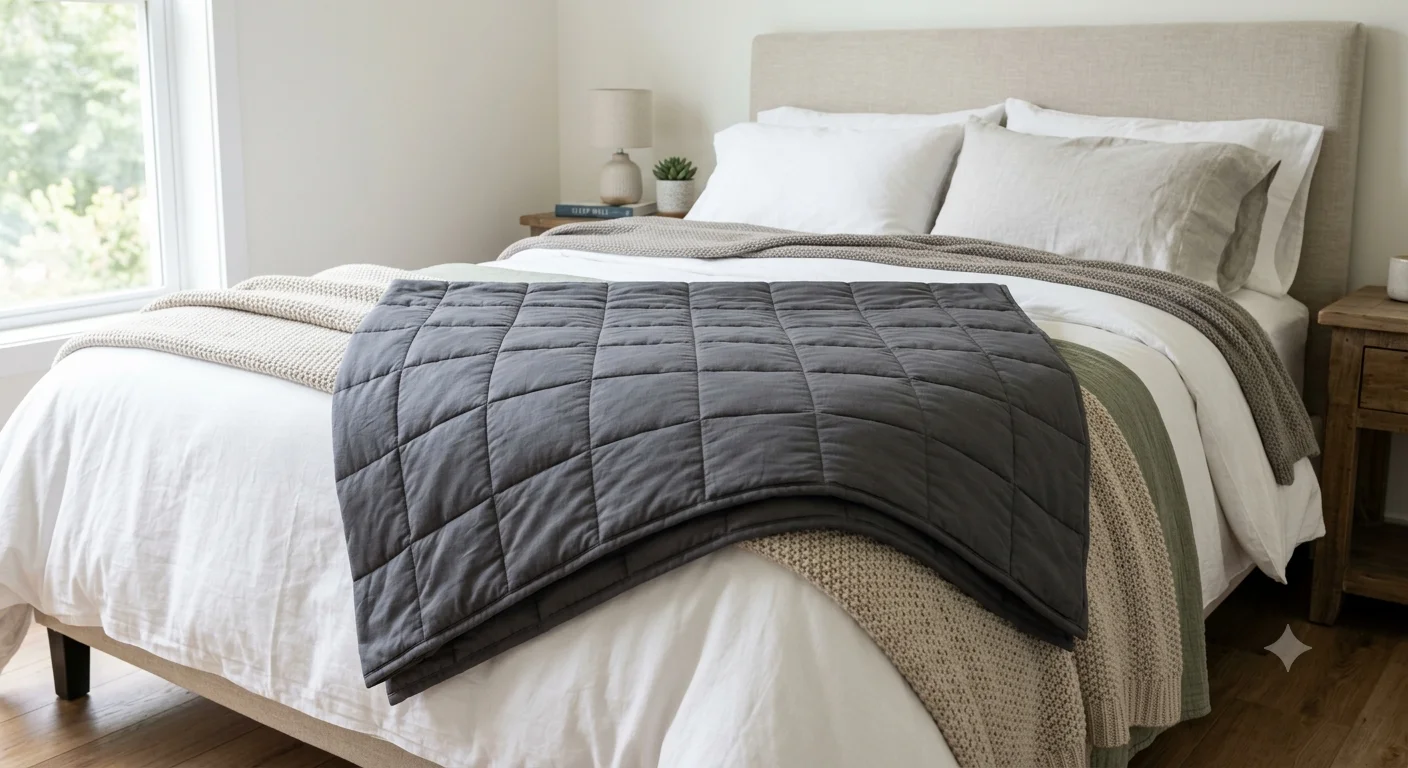
Before cleaning a weighted blanket, check both the care label and the filling. The filling affects how the blanket reacts to moisture and heat, but it doesn’t determine washability on its own. The shell fabric, stitching, batting, overall construction, and total weight all matter just as much.
Glass beads don’t absorb water and generally tolerate moisture well. That doesn’t mean every glass-bead blanket is machine washable, though. Some brands build their glass-bead inserts to go straight in the washer and dryer, while others recommend spot cleaning the insert and only machine washing the removable cover. Always check the instructions for your specific blanket rather than assuming.


Plastic poly pellets can also be washable in blankets designed for machine cleaning. Use cool water and skip heat unless the label specifically allows it. Too much heat can soften, deform, or warp the pellets, and it can also damage the fabric around them.
Sand, rice, beans, corn, and similar fillings are where you need to be most careful. These materials absorb moisture, and once wet they can swell, clump, break down, or stay damp inside the blanket for a long time. Blankets with these fillings generally shouldn’t be submerged or machine washed at all. Spot cleaning is the safer default unless the manufacturer says otherwise.
If your blanket’s tag doesn’t list the filling, check the original product listing or reach out to the manufacturer before you wash anything.
How to Wash a Weighted Blanket in the Washing Machine
Only put the blanket in the machine if the care label specifically says it’s machine washable.
- Check the blanket’s dry weight against your washer’s guidance, and keep in mind it’ll get considerably heavier once it’s soaked through. There isn’t one universal weight limit that applies to every machine, so this is worth confirming rather than guessing.
- Look the blanket over for loose stitching, holes, or any sign the filling could leak out before you load it.
- Remove the cover first if it’s detachable, and wash it separately from the insert.
- Wash the insert on its own using whatever temperature and cycle the care tag specifies. Cold water and a gentle or delicate cycle are common, but this varies by product, so don’t assume one setting fits every blanket.
- Use a small amount of mild detergent, and skip bleach and fabric softener unless the manufacturer says they’re fine.
- If the blanket is too heavy or bulky for your washer, a commercial-capacity machine at a laundromat can help, but only use it if the blanket is actually labeled machine washable in the first place. A bigger machine doesn’t make an un washable blanket safe to wash.
Washing a Weighted Blanket in the Tub
Hand washing in a bathtub only makes sense if the care label allows full immersion. Blankets filled with sand, rice, beans, corn, or other absorbent fillings should not be submerged this way. Spot cleaning is the better option for those.
For a blanket that can be hand washed:
- Fill a clean tub with cool or lukewarm water and a small amount of mild detergent.
- Lower the blanket into the water carefully and press it gently. Don’t twist, scrub hard, or wring it.
- Work light pressure into any visibly soiled spots.
- Drain the soapy water, then rinse with clean water, repeating until it runs clear.
- Press out excess water gently, without lifting the blanket by one corner or wringing it.
- Have a second person on hand to help move it once it’s wet. A saturated weighted blanket is often heavier than people expect.
How to Clean a Weighted Blanket Without a Washing Machine
Spot cleaning covers a lot of ground for blankets that can’t go through a full wash, whether that’s because of the fill type, the weight, or the construction.
- Mix a small amount of mild detergent with water in a spray bottle or bowl.
- Dab the solution onto the stained area with a clean cloth, working gently rather than scrubbing.
- Blot with a damp cloth to rinse, then blot again with a dry towel.
- Let the spot air dry completely before using the blanket again.
This is generally the safest approach for sand, rice, or bean-filled blankets, and it’s a reasonable option for smaller stains on any weighted blanket even when the whole thing is technically washable.
Washing the Cover Separately
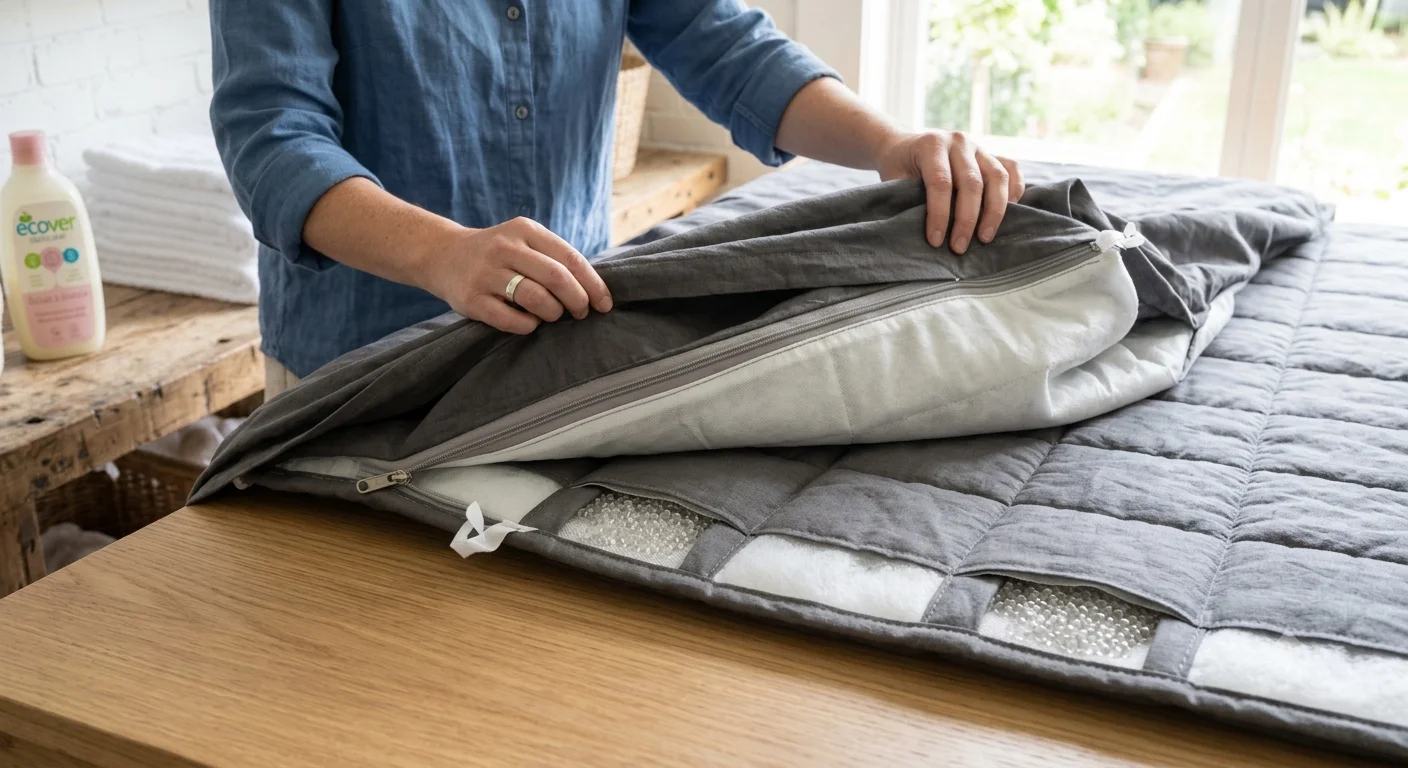
Most weighted blankets come with a removable cover in a regular fabric like cotton, minky, or bamboo-derived material, and these can usually be washed along with your normal laundry. Check the tag, since fabric type affects the right settings, but a standard cold or warm cycle is typically fine for the cover even when the insert itself needs much gentler handling.
Washing the cover on its own, and more often than the insert, is the easiest way to keep the blanket feeling clean without hauling the heavier part through a full wash every time.
How to Dry a Weighted Blanket
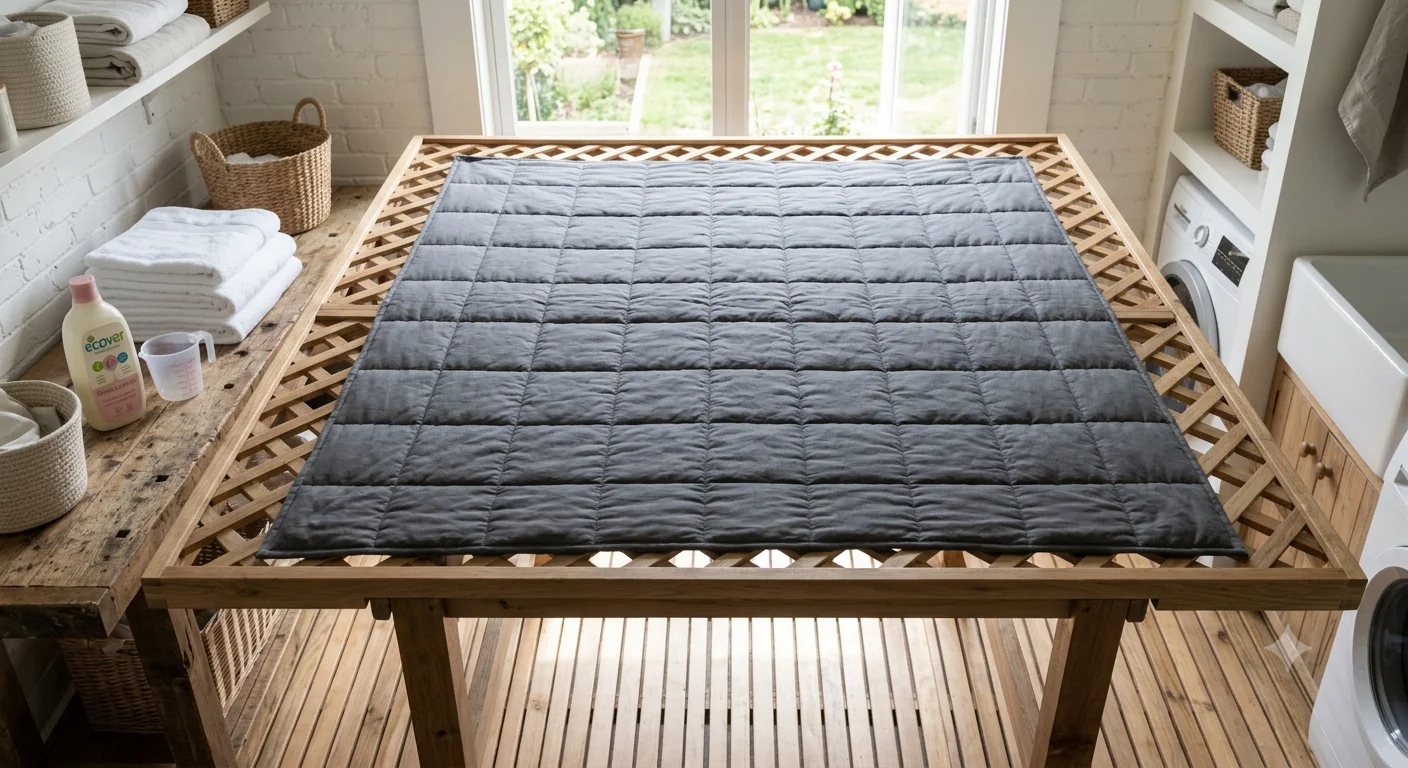
Follow the care label here too, since drying recommendations depend on the blanket’s full construction and not just what’s inside it.
- Flat air drying works for many bead-filled blankets when the label allows it. Support the blanket evenly across a clean, flat surface rather than draping it over furniture, and reposition it periodically as it dries.
- Low-heat tumble drying is fine only when the label specifically permits it. Make sure your dryer has enough room for the wet blanket to move freely without overloading the drum.
- Avoid hanging a wet weighted blanket by one edge. The concentrated weight can stretch the fabric or strain the seams.
- Avoid high heat in general. It’s more likely to damage the shell fabric, batting, binding, and stitching than the filling itself, and it can deform plastic pellets specifically.
- Don’t fold, store, or use the blanket again until it’s completely dry all the way through. Depending on the blanket’s size and your climate, this can take a while, so it’s worth checking rather than assuming it’s done on a set schedule.
How Often Should You Wash a Weighted Blanket?
There’s no single schedule that applies to every blanket. The removable cover can be washed as often as needed, based on how much the blanket gets used, spills, pets, and general contact. The insert typically needs far less frequent cleaning and should only be washed when it’s actually necessary and according to its own care label, since some manufacturers recommend washing the insert as little as once or twice a year.
Using a cover and dealing with spills quickly can cut down on how often the insert needs a full wash at all.
FAQ
Can weighted blankets go in the dryer? Some can, but only when the care label allows it. Certain glass-bead and plastic-pellet blankets are approved for low-heat drying, while others need to be air dried or spot cleaned instead.
Will washing damage the weighted filling? Water usually doesn’t harm glass beads or washable plastic pellets, but washing can still affect the blanket’s fabric, stitching, batting, or internal pockets. Organic fillings like rice, beans, and sand generally shouldn’t be submerged at all.
How do you wash a weighted blanket that’s too heavy for your machine? A commercial-capacity machine works if the blanket is actually labeled machine washable. Otherwise, follow the manufacturer’s instructions for hand washing, spot cleaning, or professional cleaning instead.
Do weighted blanket covers need to be washed separately? Yes, in most cases. Covers are usually made from more standard fabric and can handle more frequent washing on their own settings, while the insert needs gentler and less frequent care.
Can you spot clean a weighted blanket? Yes, and it’s often the safest option for smaller stains or for fillings like sand, rice, and beans that shouldn’t go through a full wash. Dab the area with a mild detergent solution, rinse by blotting, and let it air dry fully.
Need help with another blanket? See our guide on how to wash a wool blanket without shrinking it.
