










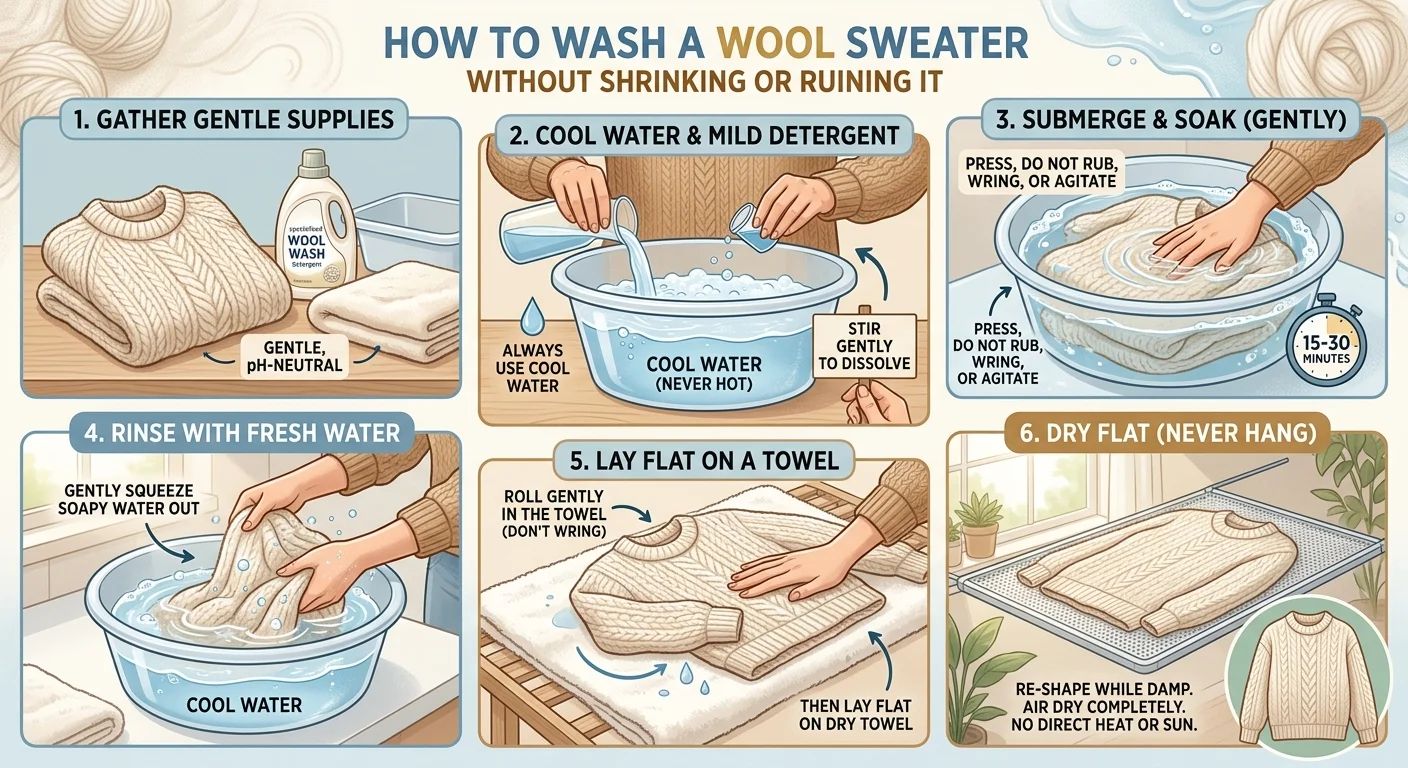
A good wool sweater can last for years, sometimes even decades, but washing it the same way you wash a cotton T-shirt can quickly change its size, shape, and texture.
If you’re wondering how to wash wool sweater, the most important rule is simple: check the care label before doing anything else. Some wool sweaters are machine washable, some should only be washed by hand, and others are marked dry clean only.
Once you know what the label allows, wool is surprisingly easy to care for.
The safest general approach is to use cool or lukewarm water, a mild wool-safe detergent, very little agitation, and flat drying. Wool does not respond well to a combination of heat, friction, and aggressive washing, which is why sweaters sometimes come out of the laundry smaller, stiffer, or misshapen.
Here is how to wash your wool sweater properly while keeping it soft, comfortable, and close to its original shape.

Check the Care Label Before Washing Your Wool Sweater
Before filling the sink or turning on the washing machine, read the label sewn inside the sweater.
You may see instructions such as:
- Machine wash on wool cycle
- Gentle or delicate wash
- Hand wash only
- Dry clean
- Dry clean only
- Do not tumble dry
- Lay flat to dry
Follow those instructions even if another wool sweater you own can be washed differently.
Two sweaters that both say “100% wool” can still have different care requirements because the yarn, dyes, knit construction, finishes, lining, embellishments, and manufacturing methods may be different.
Many modern wool garments can be machine washed when their care label specifically allows it. Woolmark recommends using the wool setting, or a cold/delicate cycle when a dedicated wool cycle is unavailable.
If the label says dry clean only, don’t assume that gentle hand washing will automatically be safe.
What You Need to Wash a Wool Sweater
You don’t need a complicated collection of laundry products.
For most washable wool sweaters, you’ll need:
- Mild wool-safe detergent
- Clean sink, basin, or washing machine
- Cool or lukewarm water
- Clean bath towel
- Flat drying surface
- Mesh laundry bag if machine washing
Choose a detergent intended for wool or delicate fabrics.
Woolmark recommends mild, neutral detergent and advises avoiding heavy-duty detergents, enzyme-containing biological detergents, and products containing bleach.
You also don’t need much detergent. Using more detergent doesn’t necessarily make a sweater cleaner and may make rinsing more difficult.
How to Wash a Wool Sweater by Hand
Hand washing gives you more control over how much your sweater moves around in the water, making it a useful option for delicate knitwear and garments labeled “hand wash.”
Here’s how to do it.
1. Fill a Basin With Lukewarm Water
Use a clean sink, bowl, or basin large enough for the sweater to sit comfortably without being tightly folded.
Fill it with cool or lukewarm water.
Woolmark’s hand-washing guidance recommends water around 30°C, or approximately 86°F.
Avoid hot water.
2. Add Wool-Safe Detergent
Add a small amount of mild wool detergent and mix it into the water before adding your sweater.
This helps distribute the detergent evenly rather than concentrating it on one part of the fabric.
3. Turn the Sweater Inside Out
Turning the sweater inside out can reduce unnecessary friction against its visible outer surface.
It is particularly useful for sweaters that are prone to surface fuzzing or pilling.
4. Gently Submerge the Sweater
Place the sweater in the water and gently press it below the surface.
Don’t scrub it against itself.
Don’t stretch the sleeves.
Don’t vigorously swish it around the sink.
Gentle movement is enough to allow the water and detergent to work through the fibers.
5. Let It Soak Briefly
Allow the sweater to soak for around 10 minutes unless its care instructions say otherwise.
Woolmark also recommends approximately a 10-minute soak for hand-washed wool garments.
Avoid leaving a delicate sweater soaking for hours.
6. Rinse Gently
Drain the soapy water and refill the basin with clean water.
Press the sweater gently to help release detergent.
Repeat as necessary until the detergent has been removed.
Try to keep the rinse-water temperature reasonably consistent rather than suddenly moving the sweater between very hot and very cold water.
7. Press Out Excess Water
Lift the sweater carefully while supporting its weight.
Wet wool can become heavy, so holding a soaked sweater from one shoulder or sleeve can stretch it.
Never twist or wring the sweater.
Instead, gently press out as much water as you can.
Then place it on a clean towel.
The Towel-Roll Method
Once your sweater has been rinsed, lay it flat on a clean bath towel.
Smooth it into approximately its normal shape.
Starting at one end, roll the towel and sweater together.
Press gently on the roll.
The towel will absorb a large amount of moisture without requiring you to wring the wool.
Unroll it afterward and move the sweater to a dry surface for air drying.
How to Wash Wool Sweater in a Washing Machine
Yes, some wool sweaters can go in the washing machine.
But the care label needs to say that machine washing is permitted.
If it does, follow these steps.
1. Turn the Sweater Inside Out
This helps protect the visible surface of the knit from unnecessary rubbing.
2. Use a Mesh Laundry Bag
Putting the sweater in a large mesh garment bag can provide additional protection from friction and snagging.
It is especially useful for loose knits or sweaters with decorative details.
3. Choose the Wool Cycle
Use your washing machine’s dedicated wool cycle when available.
If there isn’t one, a cold-water delicate or gentle cycle may be appropriate when the care label permits machine washing.
Woolmark similarly recommends the wool setting or a cold/delicates program for machine-washable wool garments.
4. Add a Small Amount of Wool Detergent
Use a neutral detergent specifically suitable for wool.
Avoid automatically using the same heavy-duty detergent you use for heavily soiled everyday laundry.
5. Wash Similar Delicate Items Together
Avoid putting a wool sweater into a load containing jeans, towels, garments with large zippers, hooks, or other items that may create significant friction.
A smaller, gentler load is better.
6. Remove the Sweater Promptly
Once the cycle finishes, take the sweater out rather than leaving it crumpled inside the machine for hours.
Reshape it while damp and prepare it for flat drying.
How to Dry a Wool Sweater Properly
Drying may be even more important than washing when you want your sweater to keep its original shape.
For traditional wool knitwear, flat drying is usually the safest approach unless the care label specifically gives different instructions.
Woolmark recommends drying knitwear such as sweaters flat and out of direct sunlight.
Lay the sweater on a clean, dry towel or suitable flat drying rack.
Then gently adjust:
- Shoulder width
- Sleeve length
- Hem
- Neckline
- Cuffs
- Side seams
You’re not trying to stretch it bigger. You’re simply returning the damp sweater to its natural proportions.
Let it dry completely before folding or wearing it.
Depending on the thickness of the sweater, temperature, airflow, and humidity in your home, drying may take considerably longer than ordinary cotton clothing.
Should You Hang a Wool Sweater to Dry?
Usually, no.
A wet wool sweater can become surprisingly heavy.
If you hang it from a standard clothes hanger while wet, gravity may stretch the shoulders and body of the sweater. You could end up with hanger bumps, elongated sleeves, or a sweater that looks longer than it did before washing.
Flat drying supports the entire garment instead.
Once the sweater is completely dry, storage requirements may vary, but folding is generally preferable for heavy knitted sweaters because it prevents prolonged stretching from hangers.
Can You Put a Wool Sweater in the Dryer?
Only when the care label specifically says you can.
Some modern wool garments have been designed and tested for tumble drying under particular settings.
Others can shrink or change texture dramatically.
Don’t assume that “low heat” makes tumble drying safe for every wool sweater.
If your label says do not tumble dry, air dry it instead.
How to Wash a Wool Sweater Without Shrinking It
Most people worried about washing wool have one concern: shrinkage.
To reduce the chance of shrinking your sweater:
- Follow its care label
- Avoid hot water
- Keep agitation gentle
- Don’t scrub the wool against itself
- Don’t wring or twist it
- Use a wool-safe detergent
- Avoid the dryer unless specifically permitted
- Reshape the sweater while damp
- Dry knitwear flat
The combination of moisture, heat, and friction can encourage wool fibers to become more tightly interlocked, which is why aggressive washing can leave wool smaller and denser.
This is also why you shouldn’t try to “wash out” a difficult stain by repeatedly scrubbing it.
How to Remove Stains From a Wool Sweater
If you’ve spilled coffee, food, makeup, or another substance on your sweater, deal with the spot gently.
First, blot away excess liquid with a clean absorbent cloth.
Don’t rub aggressively.
For washable wool, you can usually apply a small amount of diluted wool-safe detergent to the affected area and gently blot or press it.
Test any stain treatment on an inconspicuous area first, particularly with dark or strongly colored sweaters.
For valuable cashmere, vintage knitwear, unusual dyes, difficult stains, or garments marked dry clean only, professional cleaning may be a better choice than experimenting with strong stain removers.
Avoid household bleach unless the garment manufacturer specifically says it is safe.
Can You Wash Merino Wool Sweaters?
Often, yes.
Many Merino wool garments are designed to be washable, including some that are safe for a washing machine.
But “Merino” does not automatically mean “machine washable.”
Check the label first.
If your Merino sweater allows machine washing, use its recommended wool or gentle cycle and suitable wool detergent.
If the label says hand wash, follow the hand-washing method instead.
What About Cashmere Sweaters?
Cashmere requires the same basic caution as other delicate animal fibers, but individual garments can have very different instructions.
Some cashmere sweaters can be carefully hand washed. Others may be labeled for professional cleaning.
Always follow the manufacturer’s label rather than assuming that advice for ordinary wool applies equally to every cashmere item.
When washing washable cashmere, avoid vigorous rubbing, twisting, wringing, and hanging while wet.
Flat drying is especially helpful for maintaining its shape.
How Often Should You Wash a Wool Sweater?
Probably less often than you wash your everyday cotton shirts.
Wool naturally resists odor and staining better than many people expect, so a sweater that has only been worn briefly may not need a complete wash.
Woolmark notes that wool is naturally resistant to odor, stains, and creasing and therefore generally requires less frequent washing.
Between washes, you can:
- Air the sweater out
- Let it rest before returning it to storage
- Spot clean minor marks
- Remove surface lint carefully
- Wear a clean base layer underneath it
Wash when the garment actually needs cleaning rather than automatically washing it after every wear.
How to Keep a Wool Sweater Soft
Correct washing is only part of keeping wool comfortable.
Use a detergent intended for wool and avoid unnecessary heat or aggressive agitation.
If the sweater feels stiff immediately after washing, make sure detergent has been thoroughly rinsed away and allow it to dry completely before judging the final texture.
Avoid using ordinary fabric softener unless the sweater manufacturer specifically recommends it.
For high-quality wool, simple care is usually better than adding several laundry products.
How to Deal With Pilling After Washing
Those small fuzzy balls that appear on the surface of sweaters are called pills.
Pilling can happen where the fabric experiences repeated friction, such as:
- Under the arms
- Along the sides
- Where a bag strap rubs
- Around cuffs
- Across the front
Washing doesn’t always cause pilling, although unnecessary friction during laundering can make the surface look fuzzier.
Once the sweater is completely dry, pills can be carefully removed using a sweater comb or fabric tool intended for knitwear.
Don’t aggressively pull individual pills with your fingers, since you may catch or stretch the yarn.
What If Your Wool Sweater Shrunk?
If a sweater has only changed shape slightly, you may be able to improve its shape while it is damp.
Lay it flat and gently ease it back toward its original measurements without aggressively pulling the knit.
However, severe felting is much harder to reverse.
When wool fibers have become densely interlocked, many internet “unshrinking” tricks can’t truly return the fabric to its original construction.
Prevention is much more dependable than trying to repair a badly felted sweater afterward.
Common Wool Sweater Washing Mistakes
Washing Without Reading the Label
This is probably the biggest mistake because there isn’t one washing method that works for every wool sweater.
Using Hot Water
High temperatures aren’t necessary for routine wool washing and may contribute to unwanted changes in the fabric.
Scrubbing Stains Aggressively
Friction can affect the surface and structure of wool. Blot stains rather than attacking them with a brush.
Wringing the Sweater
Twisting a soaked sweater can distort the knit and stretch parts of the garment unevenly.
Hanging It While Wet
The weight of absorbed water can pull the sweater downward and stretch the shoulders or body.
Using the Wrong Detergent
A neutral detergent designed for wool or delicate fabrics is preferable to heavy-duty detergent.
Putting Every Wool Sweater in the Dryer
Some wool is dryer-safe. Some isn’t.
The care label makes the decision.
Sweater vs. Blanket: Does Wool Need Different Care?
The fundamental rules are similar, but sweaters need extra attention because knitted clothing is designed to fit a specific body shape.
Stretched shoulders or sleeves are much more noticeable on a sweater than they would be on a blanket.
For larger wool items, see our guide on how to wash a wool blanket, which covers the specific problems involved in cleaning and drying a much heavier piece of wool fabric.
And if you’re dealing with a heavy specialty blanket rather than ordinary wool knitwear, our guide on how to wash a weighted blanket explains why the filling, weight, washer capacity, and construction all affect how it should be cleaned.
Frequently Asked Questions
Can you wash a 100% wool sweater?
Yes, some 100% wool sweaters can be washed at home, but the fiber percentage alone doesn’t determine the correct method. Check the care label. Depending on the garment, it may allow machine washing, require hand washing, or call for professional cleaning.
Can I wash wool in a regular washing machine?
You can machine wash a wool sweater when its care label permits it. Use the wool cycle when available or the recommended gentle setting. Woolmark advises using a wool program, or a cold/delicates cycle if there isn’t a dedicated wool setting.
What temperature should I wash a wool sweater at?
Follow the care label. For hand washing, lukewarm water around 30°C/86°F is commonly recommended. Machine-washable garments should be washed at the temperature specified by the manufacturer.
Can I use regular detergent on wool?
A mild detergent specifically suitable for wool is the better choice. Woolmark recommends neutral, mild detergent and advises against heavy-duty, enzyme-containing biological, and bleach-containing detergents.
Can wool sweaters go in the dryer?
Only if the care label specifically allows tumble drying. Otherwise, flat air drying is the safer option for knitted wool sweaters.
Should I wash wool sweaters inside out?
Turning the sweater inside out before washing can help reduce friction on the visible outer surface. Woolmark also includes turning a wool sweater inside out or using a laundry bag in its machine-washing instructions.
Why did my wool sweater shrink?
Heat and excessive agitation can contribute to shrinking and felting. A sweater may also shrink when it is washed or dried using a method that isn’t compatible with its construction or finish.
Is hand washing always safer than machine washing wool?
Not automatically. A sweater specifically engineered and labeled for machine washing can be safely washed according to those instructions. A hand-wash-only garment should be washed by hand, while a dry-clean-only garment shouldn’t simply be hand washed as a substitute.
How long does a wool sweater take to dry?
There isn’t one fixed drying time. A lightweight Merino sweater may dry relatively quickly, while thick knitwear can take much longer. Room temperature, humidity, airflow, and how much moisture was removed with a towel all make a difference. Let the garment become completely dry before storing it.
Final Thoughts
Learning how to wash wool sweater is mostly about treating the fabric gently rather than using complicated laundry tricks.
Start with the care label. If the sweater is machine washable, use the recommended wool or delicate program with a mild wool detergent. If it is hand wash only, clean it gently in cool or lukewarm water without scrubbing or wringing.
Once it’s clean, support the sweater while wet, reshape it carefully, and dry it flat unless its label says otherwise.
Those few habits can make a big difference in keeping your wool sweater soft, properly shaped, and comfortable for many winters to come.
