









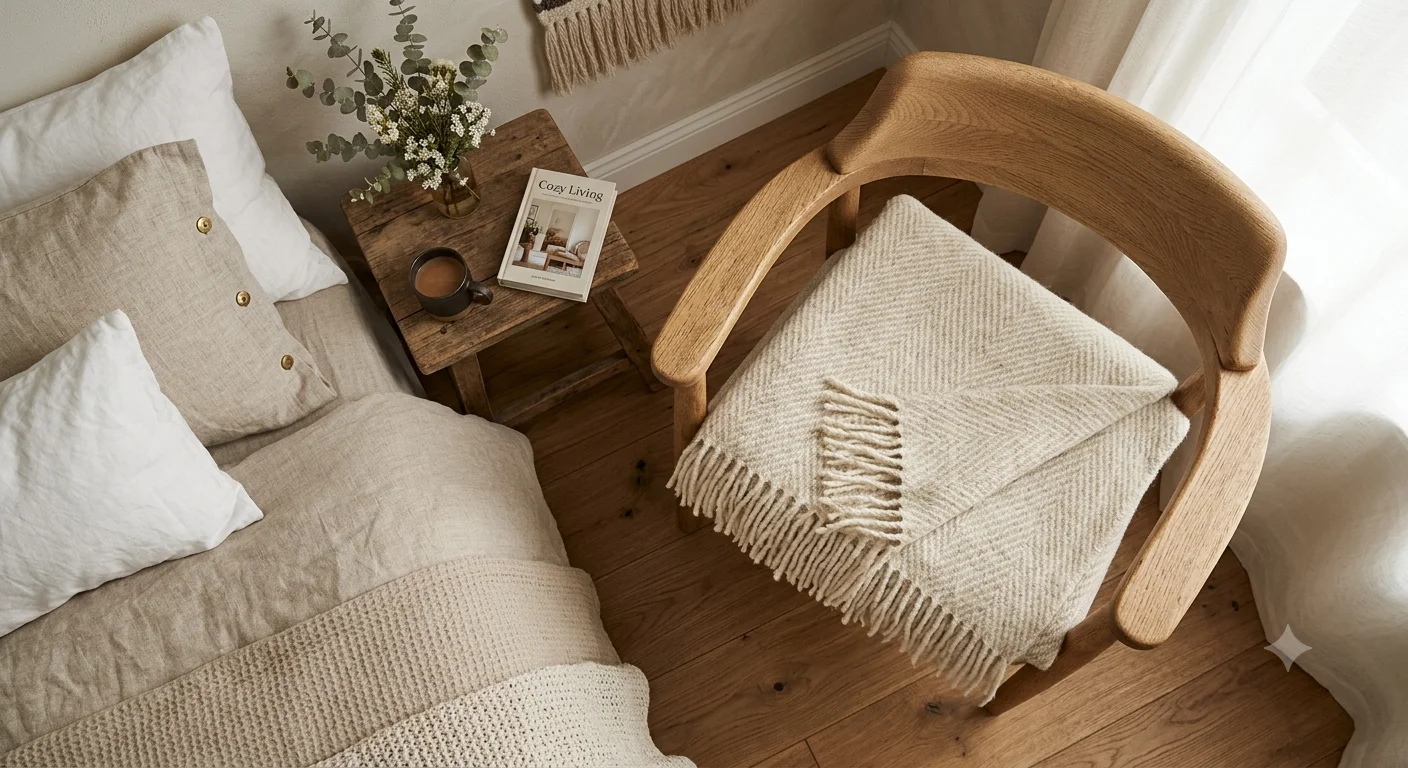
The correct method depends entirely on your blanket’s care label. A machine washable wool blanket can usually be washed in cold water on a wool or gentle cycle with wool safe detergent. A hand wash only blanket should be washed gently by hand. A blanket labeled “dry clean only” should generally be professionally cleaned rather than washed at home. Always dry according to the label, usually flat and away from direct heat.
Can You Machine Wash a Wool Blanket?What You’ll NeedHow to Wash a Wool Blanket by HandHow to Wash a Wool Blanket in a Washing MachineHow to Wash a Wool Blanket Without Shrinking ItCan You Wash a Wool Blanket That Says “Dry Clean Only”?Using Vinegar to Wash a Wool BlanketHow to Dry a Wool Blanket Without Shrinking ItCommon Mistakes That Ruin Wool BlanketsHow Often Should You Wash a Wool Blanket?FAQWool blankets are cozy, durable, and built to last for decades if you take care of them properly, but wash them the wrong way and you can end up with a shrunken, felted mess in a single cycle. The good news is that washing a wool blanket isn’t complicated once you know the rules.
Here’s exactly how to do it, step by step.
Can You Machine Wash a Wool Blanket?
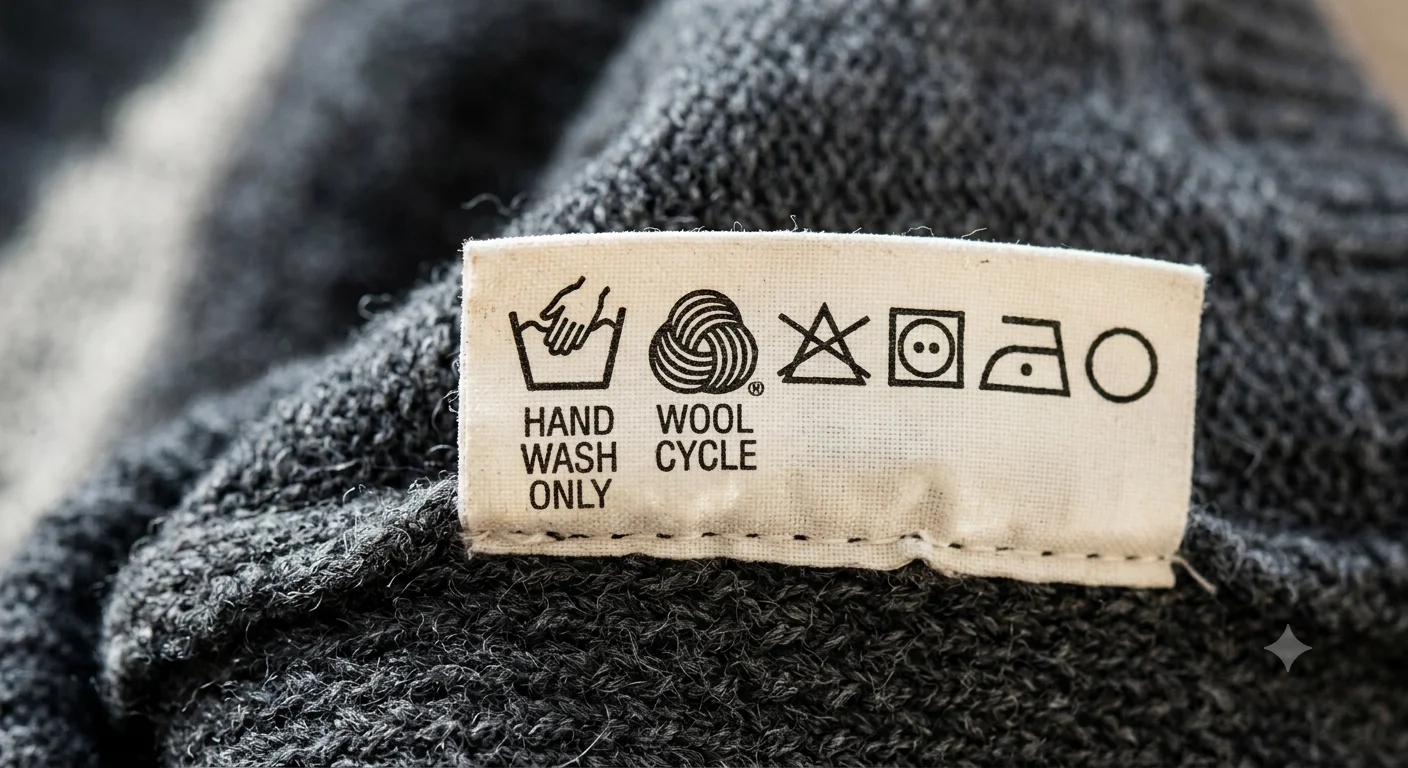
It depends on the blanket. If the care label says “machine washable” or shows a wool-cycle symbol, you can wash a wool blanket in a washing machine, as long as you use cold water, a gentle wool cycle, and a wool-safe detergent. If the label doesn’t specify a method, or the blanket is vintage, valuable, or unlabeled, it’s safer to contact the manufacturer or use a professional cleaner experienced with wool rather than guessing.

Washability isn’t just about fiber content. It also depends on the fabric’s construction, dyes, trims, and whether the wool has been given a shrink-resistant treatment. A 100% wool blanket that’s been treated can sometimes be machine washable, while a wool blend without that treatment may still require dry cleaning. The care label is the most reliable guide either way.
What You’ll Need
- A wool-safe or wool-specific detergent (avoid regular laundry detergent, since it’s often too alkaline for wool fibers)
- Cool or lukewarm water
- A mesh laundry bag (if machine washing)
- A large flat surface or drying rack
- White vinegar (optional, for rinsing and odor removal)
- A clean, dry towel
How to Wash a Wool Blanket by Hand
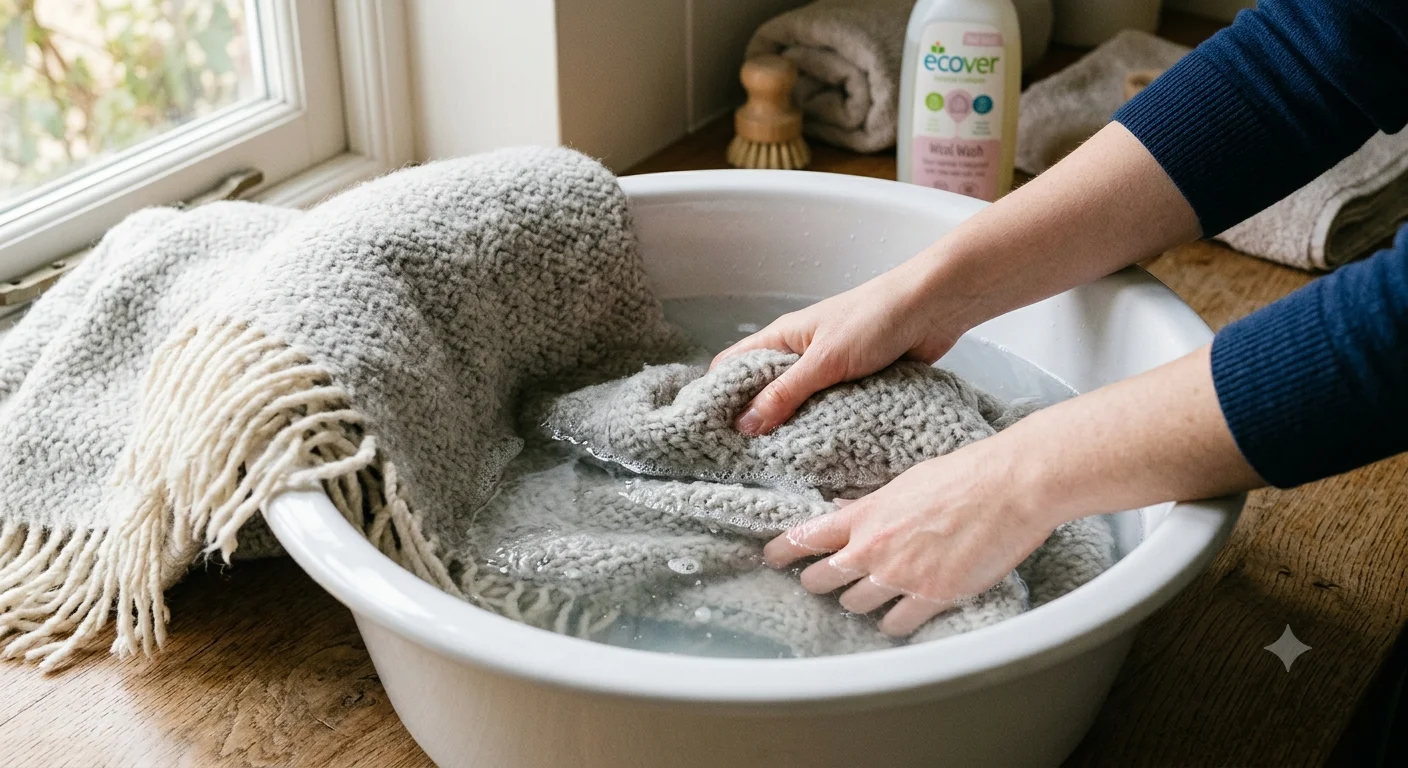
Hand washing is the gentlest and most reliable method, especially for older or delicate wool blankets.
- Fill a bathtub or large basin with cool water, never hot. Felting typically results from a combination of moisture, heat, and agitation together, so avoiding heat is one key part of preventing it.
- Add a small amount of wool-safe detergent and mix it into the water.
- Submerge the blanket and gently press the water through it. Avoid rubbing, twisting, or wringing, since wool fibers are prone to felting when agitated.
- Let it soak for about 10 to 15 minutes.
- Drain the soapy water and refill with clean, cool water to rinse. Repeat until the water runs clear. Adding a splash of white vinegar to the final rinse can help remove residue and neutralize odors.
- Press out excess water gently (don’t wring), then roll the blanket in a dry towel to absorb even more moisture before laying it flat to dry.
How to Wash a Wool Blanket in a Washing Machine
If your blanket’s care label allows machine washing, here’s how to do it safely:
- Place the blanket inside a mesh laundry bag to reduce friction and agitation.
- Select the wool or delicate cycle, using cold water, and add a small amount of wool-safe detergent. Use the cycle as designed rather than overriding its settings. Most wool cycles already include an appropriately gentle spin, and skipping extraction entirely can leave the blanket heavy and prone to stretching when you lift it out.
- Remove the blanket promptly once the cycle ends and lay it flat to dry.
How to Wash a Wool Blanket Without Shrinking It
Shrinking happens when wool fibers are exposed to a combination of heat, moisture, and agitation. To avoid it:
- Always use cold or lukewarm water, never hot
- Avoid unnecessary rubbing, scrubbing, or agitation
- Don’t tumble dry unless the care label specifically permits it
- Handle the blanket gently rather than scrubbing or wringing
If the blanket comes out only slightly misshapen, you may be able to gently reshape it while damp and dry it flat in the correct dimensions. True felting shrinkage, where the fibers have permanently interlocked, is usually irreversible, so it’s best to avoid relying on home remedies to reverse it and instead focus on preventing it in the first place.
Can You Wash a Wool Blanket That Says “Dry Clean Only”?
Generally, no. You should avoid washing a blanket labeled “dry clean only.” Water, agitation, dyes, bindings, finishes, or decorative elements can react unpredictably during washing, leading to shrinkage, color bleeding, texture changes, or distortion that can’t be undone.
A small number of manufacturers do provide separate hand-washing instructions for certain dry-clean-only products, but that exception only applies when the manufacturer specifically approves it, so check their website or care documentation rather than assuming. For an antique, valuable, lined, embellished, or unlabeled blanket, your safest option is a professional cleaner experienced with wool.
Using Vinegar to Wash a Wool Blanket
A small amount of diluted white vinegar in the rinse water is sometimes used to help neutralize detergent residue and mild odors. It’s not a required step. A proper neutral wool detergent shouldn’t need it as a routine addition, but some people like it as an occasional, gentle finishing touch. If you try it, use it sparingly and rinse thoroughly afterward.
How to Dry a Wool Blanket Without Shrinking It
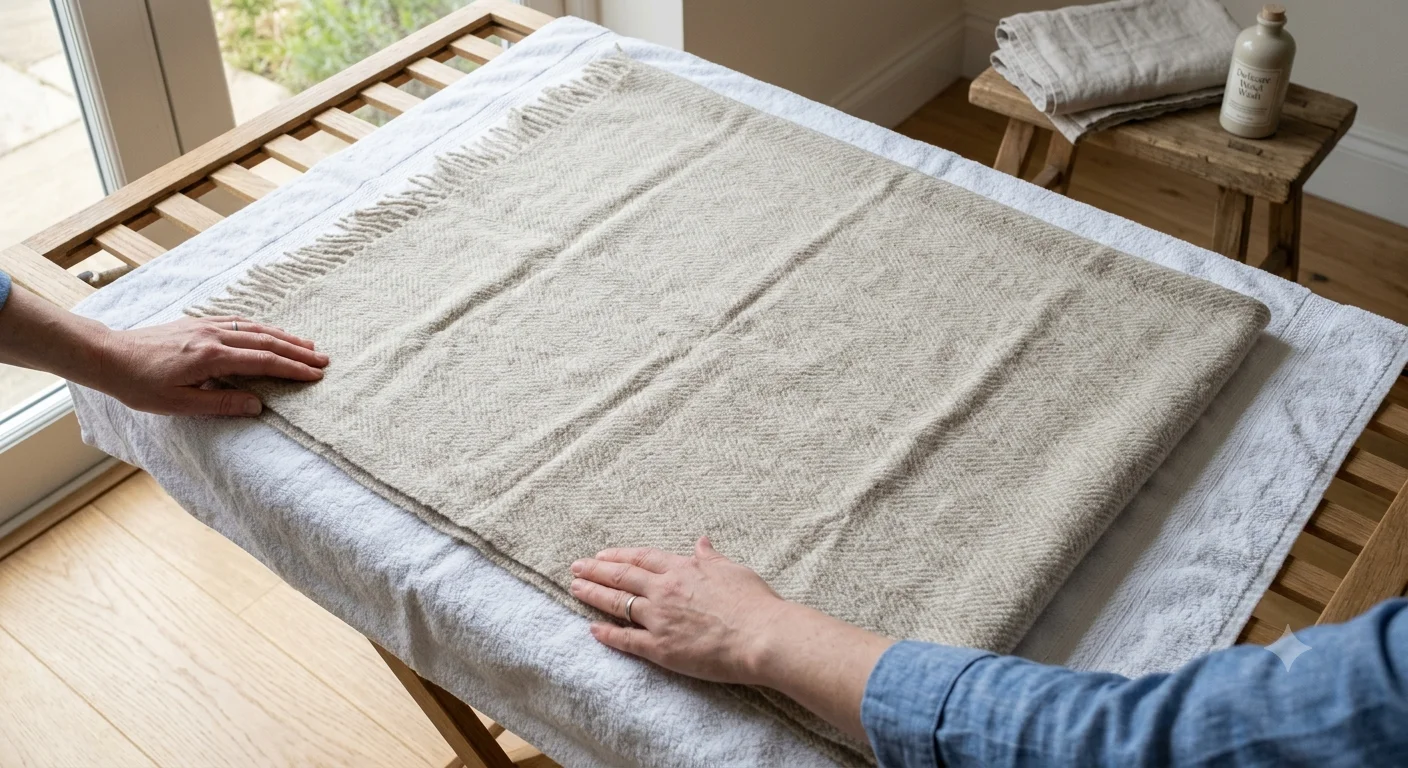
Improper drying can shrink, stretch, distort, or roughen a wool blanket, so it’s worth taking care here. Don’t tumble dry a wool blanket unless the care label specifically permits it. Instead:
- Roll the blanket in a dry towel to absorb excess moisture.
- Lay it flat on a clean, dry surface. A drying rack, patio table, or spare bed with a towel underneath works well.
- Reshape the blanket to its original dimensions while it’s still damp.
- Let it air dry fully, flipping occasionally to help both sides dry evenly. This can take 24 to 48 hours depending on thickness and humidity.
- Avoid direct sunlight or heat sources, which can fade colors and dry out the fibers unevenly.
Common Mistakes That Ruin Wool Blankets
- Using hot water: a major contributor to shrinking and felting, especially combined with agitation
- Regular laundry detergent: too harsh for wool’s natural fibers
- Tumble drying without checking the label: heat and tumbling can cause shrinkage, felting, or texture changes unless the blanket is specifically labeled dryer-safe
- Wringing or twisting: stretches and distorts the fibers
- Ignoring the care label: always check before you start
How Often Should You Wash a Wool Blanket?
Wool is naturally resistant to odor and dirt, so it doesn’t need frequent washing. Airing, shaking out, and brushing the blanket can refresh it between full washes and reduce how often you need to clean it. As a general guideline, some experts suggest washing roughly every few months, but this isn’t a strict rule. Let visible soiling or odor be your cue rather than the calendar.
FAQ
Can wool blankets go in the dryer? Only if the care label specifically permits tumble drying. Most traditional wool blankets should be air dried, since heat and tumbling can cause shrinkage, felting, or texture changes.
Will washing a wool blanket shrink it? It can, if washed in hot water or agitated too much. Using cold water, gentle handling, and air drying flat minimizes the risk of shrinkage.
What detergent is safe for wool? Look for a detergent labeled specifically for wool or delicates. These are formulated to be gentler and less alkaline than regular laundry detergent, which can damage wool fibers.
Can you wash wool in warm water? Lukewarm water is generally safe, but cold water is the safest choice. Avoid hot water, which is a major contributor to shrinking and felting.
How do you fix a shrunken wool blanket? If it’s only slightly misshapen, you may be able to gently reshape it while damp and dry it flat in the correct dimensions. True felting shrinkage is usually permanent, so prevention is more reliable than trying to reverse it.
