










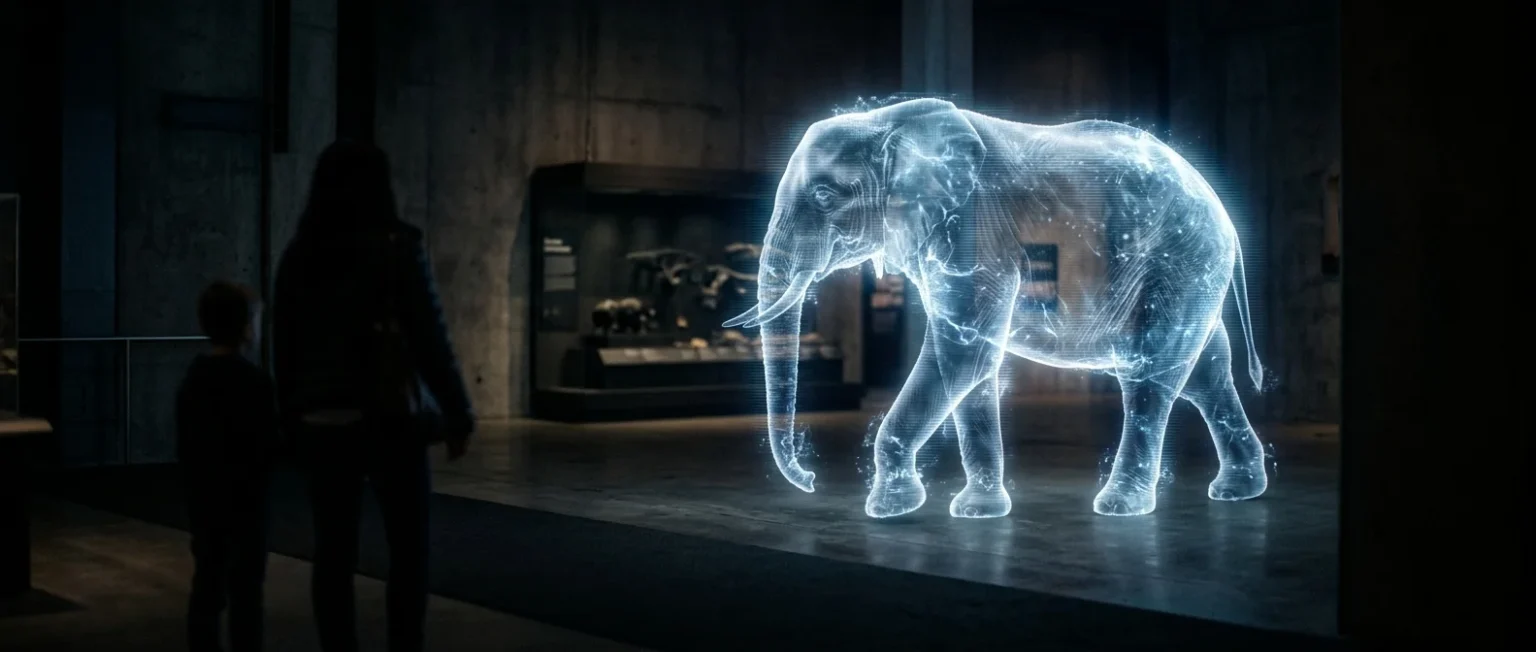
Search “artificial zoo” and most of what comes back reads like speculation: articles that describe holograms, robots, and VR as something that could replace traditional zoos someday. What almost none of them mention is that an artificial zoo is already a real, ticketed attraction with locations open in Austin, the Chicago suburbs, and Pennsylvania right now, with more on the way in Las Vegas and Arizona.
This guide skips the “what if” framing and covers what an artificial zoo actually is, which real attractions currently carry the name, what a visit looks like, and why the idea has been debated by animal welfare groups for years before any of this technology existed.
What “Artificial Zoo” Actually Means
The phrase covers three different things, and mixing them up is where most confusion starts.
Branded hologram zoo attractions. This is the most literal, current meaning. A company called Axiom Holographics, based in Australia, developed a franchise concept literally called “Hologram Zoo.” It uses laser projection to create free-floating, walk-through animals in tunnels and fenced-off “enclosures,” no headset required. This is a specific, trademarked business, not a generic term.
Animatronic or robotic animal exhibits. Physical, motorized animals that move, breathe, and react, used in traveling dinosaur exhibits, some sanctuary displays, and even religious institutions. In Kerala, India, temples have started using life-sized robotic elephants instead of live ones for festival processions, as a lower-stress alternative for an endangered species.
You may also Like

Digital and AR/VR wildlife experiences. Screen-based or headset-based simulations of animals and habitats, used in museums, aquariums, and standalone attractions.
An artificial zoo, in the way the term is actually being used and searched right now, most often refers to the first category: a physical venue you can walk into and pay admission for.
Real Artificial Zoos You Can Visit in the US Right Now
Axiom Holographics’ Hologram Zoo has expanded into the US market faster than most coverage of the topic reflects. As of 2026, locations include:
- Zoocade in Austin, Texas — the first fully holographic zoo to open in the country, running a 60-foot holographic tunnel plus smaller close-up rooms.
- Hologram Zoo Illinois, inside Hawthorn Mall in Vernon Hills, the first permanent one in the Chicago area.
- Hologram Zoo Lehigh Valley, Pennsylvania, which runs regular public sessions plus school field trips and birthday parties.
The company has stated that more locations are planned for Las Vegas and Arizona, and franchise territories have already been sold across states including Florida, Georgia, Texas, and Tennessee, so this list will likely be out of date within a year.
What You Actually See and Do Inside
Across the US locations, the format is fairly consistent. Visitors wear lightweight 3D glasses, not a VR headset, and walk through themed tunnels and enclosures where laser-light projections of animals appear to move around and above them. Common themes include Africa, Asia, the Arctic, a prehistoric/dinosaur experience, and an aquatic or ocean setting. Some venues add a “sky roof,” a glass ceiling panel that projects animals appearing to walk overhead.
A full visit typically runs 45 minutes to an hour and moves through multiple zones. Photos and short videos of the experience are usually included in the ticket price so guests can share them afterward.
Cost and Practical Details
Ticket prices vary by location but generally fall in a similar range:
- Zoocade (Austin): tickets start around $20
- Hologram Zoo Illinois and Lehigh Valley: general admission runs roughly $15 to $30, with group, school, and party rates available separately
- Annual passes exist at some locations for frequent visitors, often priced around $200 for repeat entry across a year
A few practical notes worth knowing before booking: most locations recommend booking a timed slot in advance, especially on weekends, though walk-ins are usually accepted if space allows. The rooms involve sudden movement, low lighting, and loud sound in places, which some venues flag as a consideration for very young children or anyone sensitive to noise or flashing light. Most locations set a recommended minimum age of around 5, though younger children are typically allowed in free or at a reduced rate.
The Bigger Debate: Why This Idea Predates the Technology
The push toward artificial or non-living zoo alternatives isn’t new, and it didn’t start with holograms. Animal welfare organizations have been raising the idea for over a decade. Zoocheck, a Canadian wildlife protection group, published a rundown of alternatives back in 2016 that’s still one of the more specific accounts of what this space has tried:
- ORBI, an experimental theme park that paired Sega’s technology with BBC Earth footage to create an immersive, multi-sensory animal experience, including scent and underfloor vibration effects.
- Dino Zoo in France, a wooded park using animatronics to recreate prehistoric animals and their habitats in detail.
- A separate animatronic dinosaur project from game developers at Queensland University of Technology, where visitors interacted with AI-driven digital dinosaurs through touchscreens.
- The Landmark Interactive Virtual Experience (L.I.V.E.) Centre, a planned virtual zoo and aquarium concept with no live animals at all.
- Elephant LAByrinth, a concept developed with Zoocheck to let visitors experience the sensory world of elephants (sight, sound, smell) without a single live elephant on site.
The argument behind all of these predates hologram tech entirely: that some of what a zoo is supposed to offer, education, wonder, close-up encounters with animals people will never see in the wild, doesn’t actually require keeping an animal in captivity to deliver it. Robotic elephants replacing live ones in Indian temple ceremonies is a more recent, real-world example of the same logic being applied outside of tourism entirely, to reduce stress and risk for an endangered species used in religious events.
Is an Artificial Zoo a Substitute for a Real One?
No advocate for this technology, including Axiom Holographics itself, claims a hologram tunnel replaces conservation work done by accredited zoos, wildlife sanctuaries, or rescue centers. What it does offer is a lower-stakes way to see animals people otherwise couldn’t, extinct species, deep-sea creatures, migration events, without transporting or housing a living animal to do it. Whether that’s a meaningful substitute or just a different kind of entertainment depends largely on what a visitor is looking for: a family outing and a few good photos, or a live encounter with an actual animal.
Frequently Asked Questions
Is an artificial zoo the same as a VR zoo? Not exactly. Most current US locations, including Zoocade and Hologram Zoo, use laser hologram projection viewed through lightweight 3D glasses, not a VR headset. Some separate attractions do use full VR, but that’s a different setup from the “hologram zoo” format most people are searching for.
Are the animals at a hologram zoo real in any way? No. They’re laser-light projections. Nothing physical is present in the room besides the projection hardware and the guests.
Is it educational, or just entertainment? Most locations position themselves as edutainment, mixing themed environments with some facts about the animals and habitats shown. It’s not a substitute for the depth of a natural history museum or an accredited zoo’s education programs, but it’s more structured than a pure arcade attraction.
How long does a visit take? Most sessions run 45 minutes to an hour, covering several themed zones in one ticketed visit.
Is it appropriate for toddlers? Most venues recommend a minimum age of around 5, since the rooms can be dark and animals appear and move suddenly, which some younger children find startling rather than exciting.
