










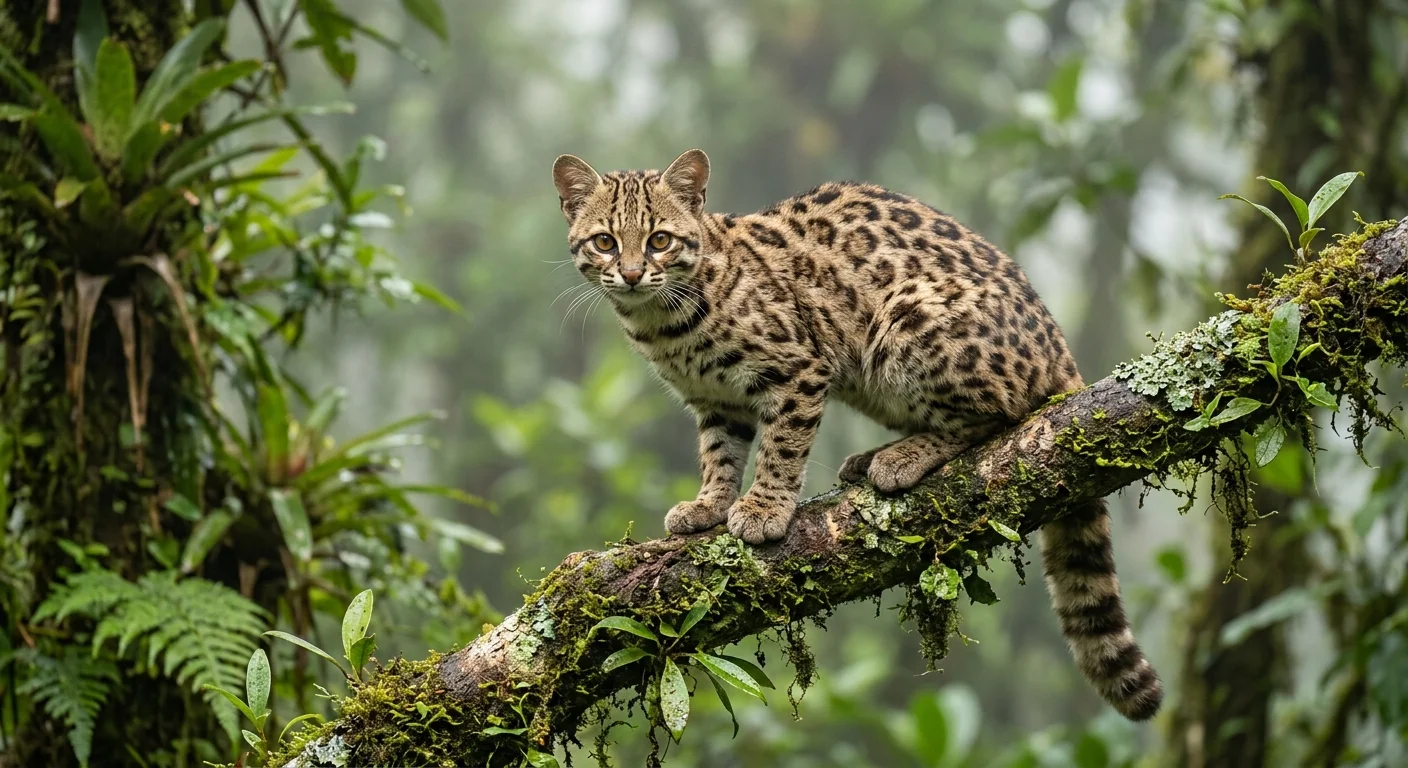
For the first time in more than a century, researchers have formally identified a brand-new species of wild cat. Named Leopardus tilcayo, the animal has been dubbed the “tilcayo tiger cat” and hails from one of the most biodiverse and least-studied regions on Earth: Bolivia’s Yungas cloud forest.

Quick Facts
- Species name: Leopardus tilcayo
- Common name: Tilcayo tiger cat
- Location: Yungas cloud forest, Bolivia
- Size: ~18 inches long, 3 pounds (smaller than an average house cat)
- Appearance: Light brown coat with irregular leopard-like rosettes, rounded ears
- Published in: Current Biology, September 17, 2026
- Significance: First new living feline species formally described in over 100 years
A Cat Hiding in Plain Sight
The story behind the discovery is almost as remarkable as the cat itself. Around 2017, a local family in Bolivia turned over a kitten they’d been keeping as a pet to the Senda Verde Wildlife Sanctuary, after realizing it wasn’t an ordinary house cat. That animal, now a 10-year-old male, remains the only known individual of his species recognized by science.
Biologist and National Geographic Explorer Paola Nogales-Ascarrunz first took interest in the cat years ago. Genetic testing eventually confirmed what she suspected: this wasn’t a known species at all.
What Makes the Tilcayo Different
The tilcayo is small and slender, with rounded ears and irregular leopard-like rosettes across a light brown coat. It measures about 18 inches long and weighs roughly 3 pounds, noticeably smaller than the average house cat.
It belongs to a group called tiger cats, small wild felines in the genus Leopardus found across South and Central America. For decades, these cats were lumped together as a single species, Leopardus tigrinus, simply because they looked alike.
Rewriting the Cat Family Tree
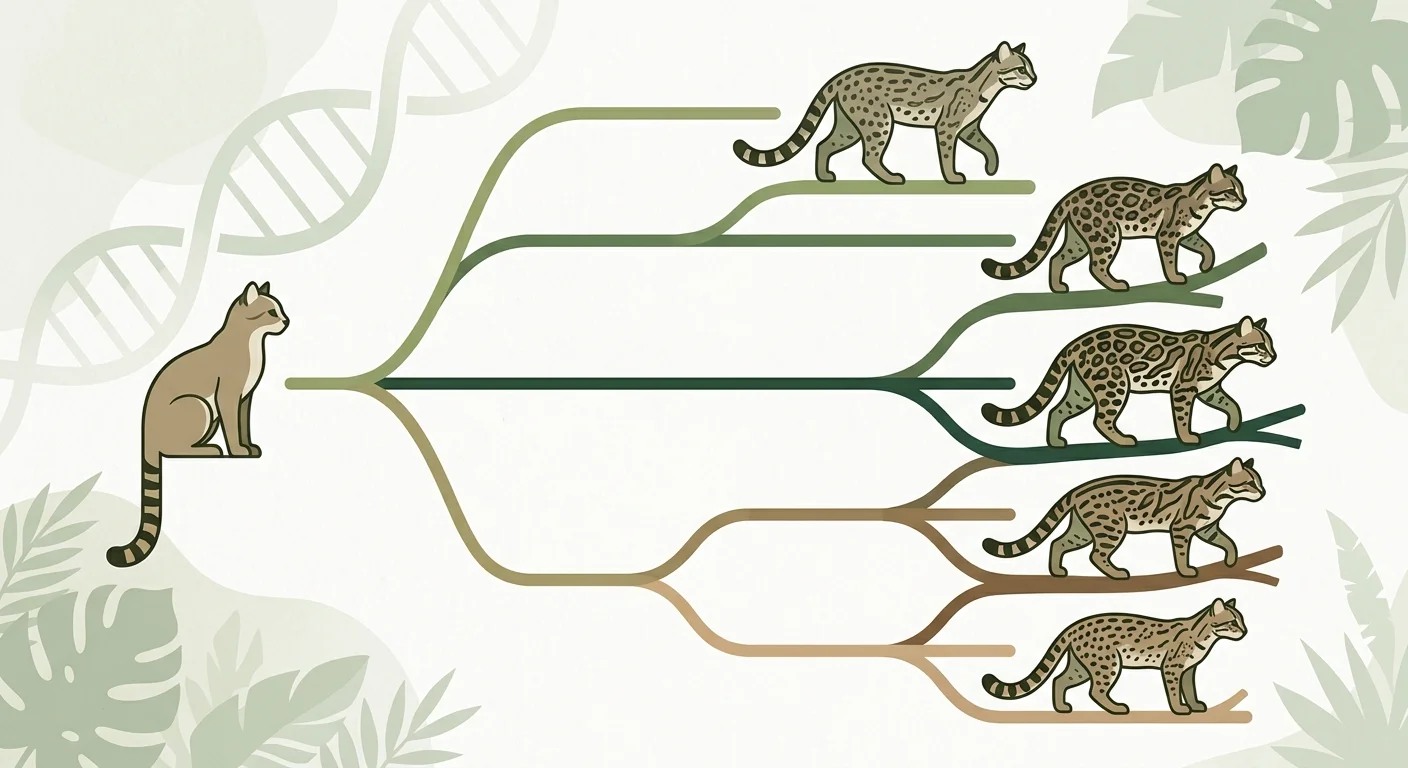
That assumption has now been overturned. By analyzing DNA from both museum specimens and living animals, researchers found evidence for at least five genetically distinct tiger cat species, each with its own evolutionary path. Alongside the newly named tilcayo, the study formally describes four others: L. guttulus, L. emiliae, L. pardinoides, and L. tigrinus.
Why This Discovery Matters
Large, dramatic new species are rare finds. Most newly identified animals tend to be small, easy to overlook, and confined to narrow habitats, which is exactly why the tilcayo went unrecognized for so long.
Its home, the Yungas cloud forest where the Andes mountains meet the Amazon basin, is one of the least-studied ecosystems in the Neotropics, despite holding extraordinary levels of biodiversity found nowhere else.
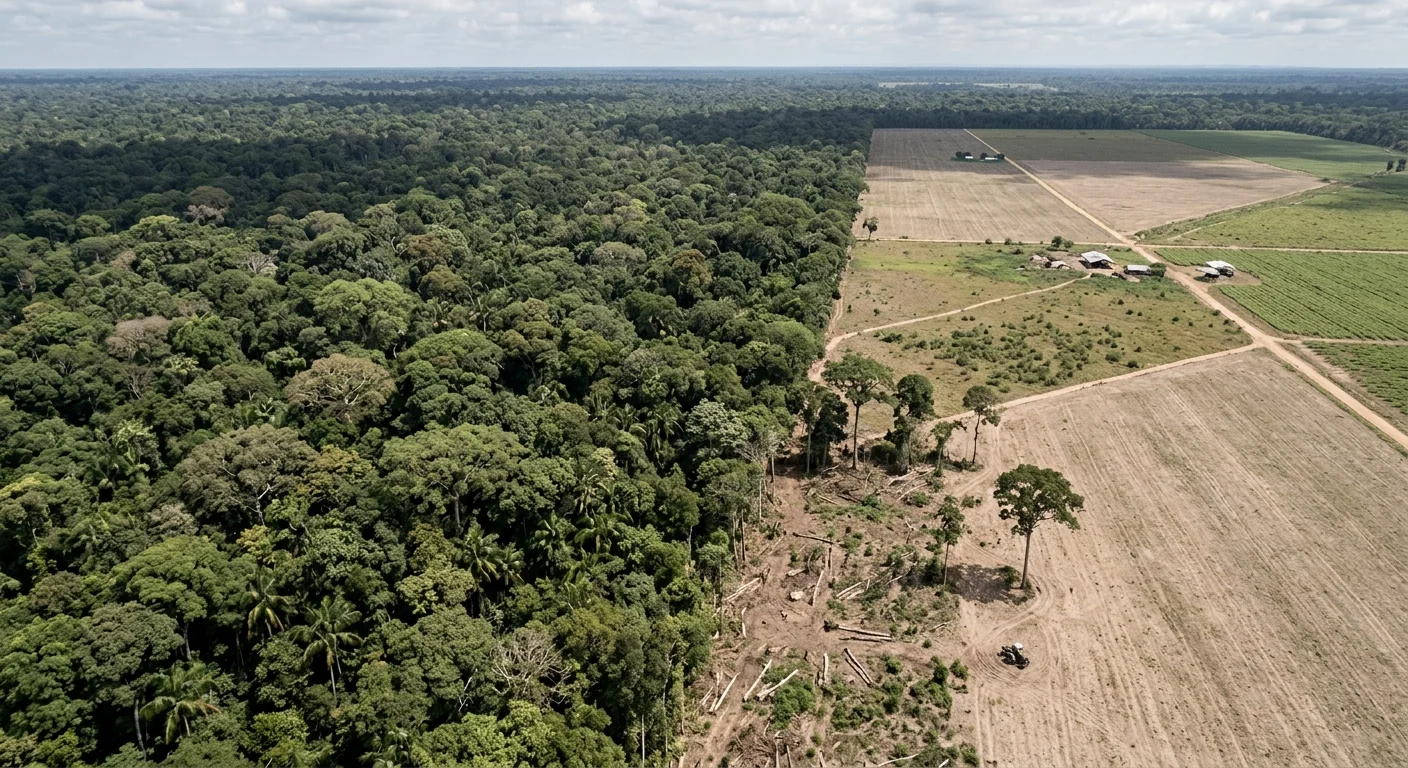
That obscurity cuts both ways. Tiger cats across South America face mounting pressure from agriculture and deforestation, and their habitats are vanishing quickly, sometimes before scientists even know what lives there. The tilcayo’s discovery is a reminder of how much remains undocumented in the natural world, and how much could disappear before it’s ever studied.
Researchers hope the genetic methods used in this study could help uncover more hidden cat species elsewhere in the world. For now, the tilcayo stands as proof that even in 2026, the planet still has secrets left to find.
FAQ
What is the Leopardus tilcayo?
It’s a newly identified species of small wild cat native to Bolivia’s Yungas cloud forest, formally described in September 2026.
Why is this discovery significant?
It’s the first new living feline species formally described by scientists in over 100 years.
Where does the tilcayo cat live?
In the Yungas cloud forest of Bolivia, where the Andes mountains meet the Amazon basin.
How big is the tilcayo cat?
About 18 inches long and 3 pounds, smaller than the average house cat.
How was it discovered?
A kitten was kept as a pet by a local family before being handed over to a wildlife sanctuary. DNA testing later confirmed it belonged to a previously unknown species.
Are there other new tiger cat species?
Yes. The same study also formally described four other species: L. guttulus, L. emiliae, L. pardinoides, and L. tigrinus.
Source: Study published in Current Biology, September 17, 2026. Reporting from National Geographic, NBC News, Al Jazeera, and The Washington Post.
